
SG&A Meaning
Understanding SG&A Meaning: A Comprehensive Guide for Business Owners
Every business leader, from startup founders to seasoned CFOs, eventually encounters the term “SG&A” during high-stakes board meetings or quarterly reviews. Understanding the SG&A meaning is not merely an accounting exercise; it is a fundamental requirement for mastering your company’s financial health. If you are struggling to categorize your outflows or wondering why your margins aren’t reflecting your operational efficiency, you are likely misinterpreting these critical overhead costs.
According to Kruze Consulting, founders often hear the term “SG&A expenses” tossed around in board meetings, which stands for selling, general, and administrative expenses. These figures serve as the backbone of your financial statements, providing a clear view of what it actually costs to keep the lights on, regardless of how many units you sell.
In this guide, we will break down exactly what falls under this umbrella, how it differs from your cost of goods sold, and why tracking these metrics is the difference between scaling profitably and burning through your runway. If you are ready to gain full visibility into your operating expenses, let’s dive into the mechanics of your business overhead.
What Exactly is SG&A? Defining the Core Concept
When you look at your income statements, you are looking at the story of your business. SG&A is the chapter that details your support systems. According to Investopedia, SG&A expenses comprise costs related to managing daily business operations, excluding direct production expenses. Essentially, if an expense doesn’t go into the physical creation or delivery of your product, it almost certainly belongs here.
Think of SG&A as the “infrastructure cost” of your organization. Whether you sell one unit or one million, these costs remain relatively stable, acting as the foundation upon which your revenue-generating activities are built. According to Groww, SG&A expenses can be defined as all the operating expenses incurred by a firm that is not inclusive of the cost of goods sold. Understanding this distinction is the first step toward better cash flow management.
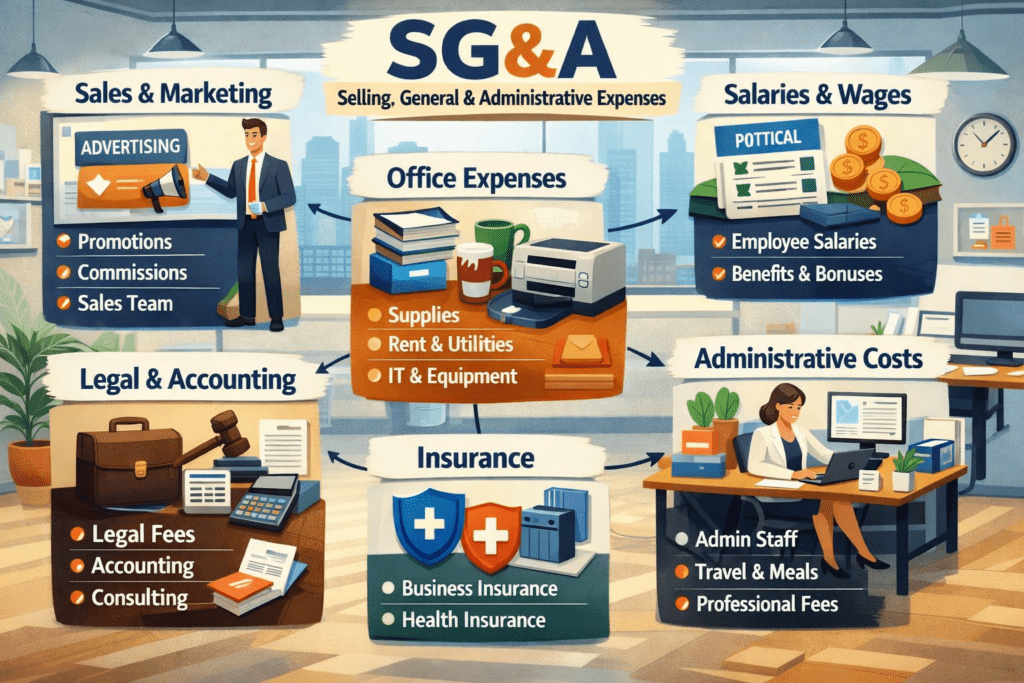
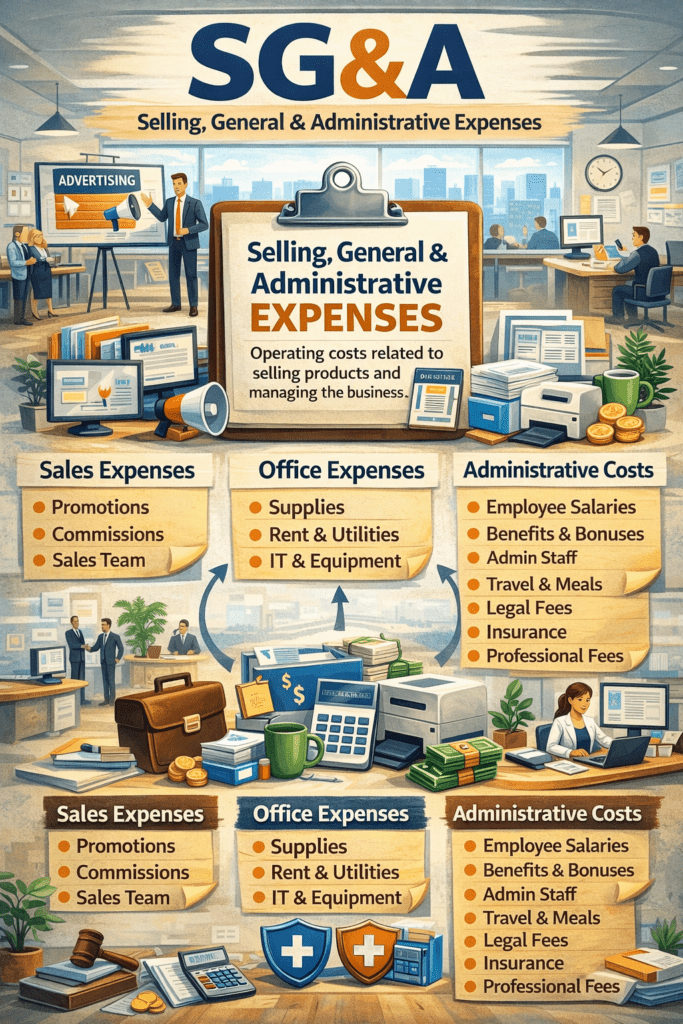
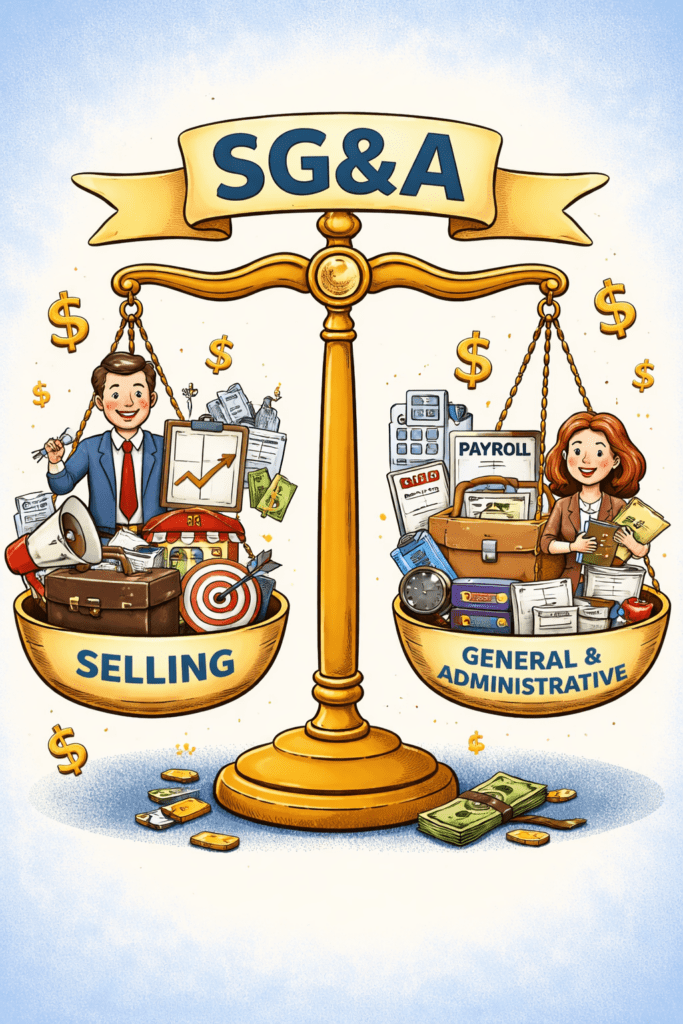
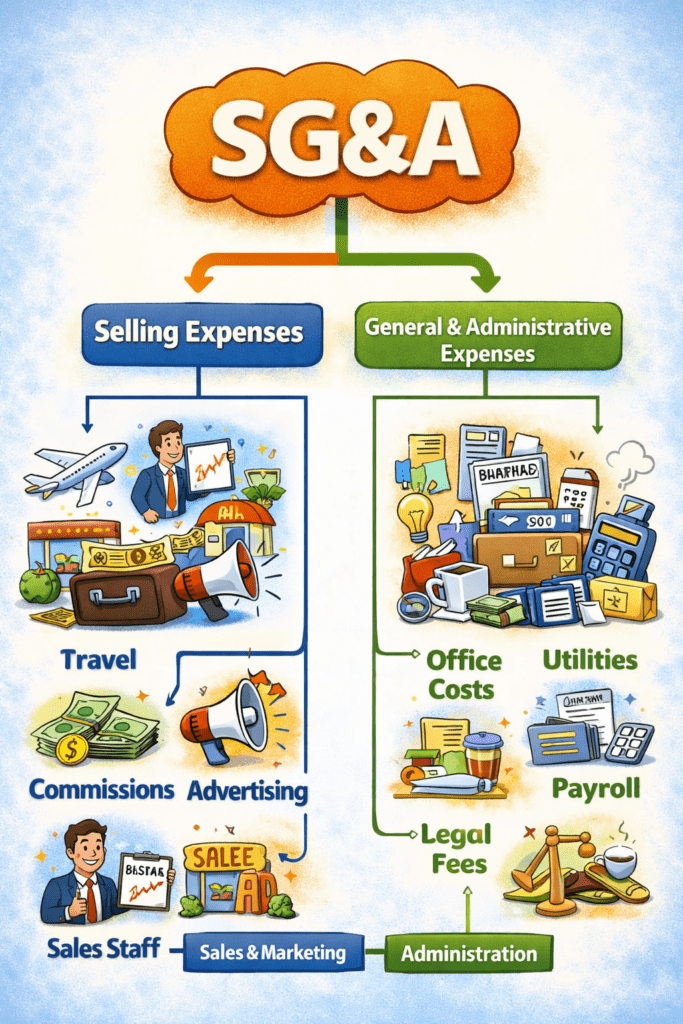
- Selling Expenses: The costs associated with marketing, advertising, and the sales team required to bring your product to the customer.
- General Expenses: The overhead costs of keeping the office running, such as rent, utilities, and insurance.
- Administrative Expenses: The costs of back-office support, including executive salaries, accounting, and legal fees.
Are you currently tracking these categories separately, or are they lumped into a single “miscellaneous” bucket? If you aren’t segmenting these, you are missing opportunities to optimize your spending. According to Ramp, SG&A expenses are the overhead costs a business incurs to support operations that are not directly tied to generating revenue. Recognizing this allows you to identify where you might be overspending on non-essential administrative functions.
The Critical Distinction: SG&A vs. COGS
Have you ever wondered why two companies with the same revenue can have vastly different profit margins? The answer often lies in how they classify their costs. The most common point of confusion for new business owners is the difference between Cost of Goods Sold (COGS) and SG&A. Misclassifying these can lead to distorted gross margin data, which can mislead investors and internal decision-makers alike.
According to CFO Selections, the terms OPEX and Selling, General and Administrative (SG&A) expenses are generally used interchangeably. While OPEX is a broader category, SG&A specifically isolates those costs that exist independently of your production volume. COGS, by contrast, is variable—it fluctuates directly with your sales.
If you are looking to improve your bottom line, analyzing your SG&A is often more effective than squeezing your COGS. Why? Because COGS is often limited by material costs and manufacturing realities, whereas SG&A is often bloated by inefficiencies in corporate structure, marketing waste, or excessive administrative overhead.
- COGS: Direct materials, direct labor for production, and manufacturing overhead.
- SG&A: Marketing budgets, office rent, non-production salaries, and legal/accounting fees.
If your business is struggling to maintain profitability, consider auditing your SG&A. It is often the place where “hidden” costs accumulate over time. By clearly separating these from your COGS, you can better understand your operating leverage and how much revenue you truly need to cover your fixed costs.
Why SG&A Management is Vital for Scaling
As a business grows, the temptation to expand the administrative team and increase marketing spend is immense. However, uncontrolled growth in SG&A can lead to “corporate bloat,” where the cost of managing the company begins to outpace the revenue growth of the company. This is why active management of your operating expenses is essential.
According to FE Training, SG&A reflects the overhead costs a company incurs to promote, deliver and sell a company’s product or service. If these costs rise faster than your sales, your profit margins will shrink, even if your product is popular. This is a common trap for startups that prioritize scale over efficiency.
Managing SG&A effectively requires a disciplined approach to your income statements. You should be reviewing these line items monthly to ensure that every dollar spent is contributing to the top line or essential operations. Ask yourself: Is this marketing spend actually driving acquisition? Is this administrative cost providing value to the customer?
- Audit Regularly: Review your SG&A monthly to identify “drift” in spending.
- Benchmark: Compare your SG&A as a percentage of revenue against industry standards.
- Automate: Use software to manage repetitive administrative tasks to keep headcount-related expenses in check.
The Role of Headcount and Payroll in SG&A
One of the largest components of SG&A is often the people who don’t touch the product. While your manufacturing team is part of COGS, your HR, marketing, sales, and executive teams fall squarely into the SG&A bucket. This is where most of your cash is likely flowing, and it requires careful oversight.
According to Groww, SG&A includes all the core non-production costs your company incurs, such as headcount-related expenses, payroll taxes, and benefits. These are often modeled at roughly 25% of the base salary, making them a significant portion of your total operating overhead. Ignoring these costs in your budget is a recipe for a cash flow crisis.
When you are hiring, it is vital to understand the “fully loaded” cost of an employee. If you bring on a new marketing manager, their salary is not the only cost; their benefits, payroll taxes, and the software tools they require all add to your SG&A. If these costs are not managed relative to the revenue that employee generates, your SG&A will climb, and your profitability will suffer.
Optimizing SG&A for Long-Term Financial Health
Optimization is not just about cutting costs; it is about allocating resources where they generate the highest return. If you cut your SG&A too aggressively, you may stifle your growth by under-investing in the very marketing or administrative support that allows your company to scale. The goal is to maximize the impact of every dollar spent.
Consider the “General” aspect of SG&A. This often includes office leases, software subscriptions, and utility costs. In the modern era, many of these are flexible. By moving toward remote work or adopting cloud-based SaaS solutions, many businesses have successfully reduced their fixed SG&A, allowing them to reinvest those funds into product development or sales efforts.
- Identify Non-Value-Added Costs: Are you paying for software that no one uses? Cancel it.
- Leverage Outsourcing: Can accounting or legal tasks be handled by a third-party firm more cheaply than an in-house team?
- Focus on Efficiency: Use data to determine which sales channels offer the best ROI, and shift your “Selling” expenses there.
Common Pitfalls in SG&A Reporting
Why do so many businesses get their SG&A reporting wrong? Often, it is due to a lack of clear accounting policies. When every department head is allowed to classify expenses as they see fit, your financial statements become a collection of guesses rather than a source of truth. This makes it impossible to make informed strategic decisions.
One of the most dangerous pitfalls is “hiding” COGS in SG&A. For example, if you classify a portion of your manufacturing labor as administrative to make your gross margins look better, you are lying to yourself. This prevents you from understanding the true cost of your product and can lead to underpricing, which is a fast track to insolvency.
Ensure that your accounting team has strict guidelines for what constitutes SG&A. If you are using professional services like financial statements software, ensure the categorization rules are locked down. Transparency in your reporting is the hallmark of a well-run, scalable company.
Comparison of Common Business Expense Categories
| Expense Category | Primary Driver | Impact on Margin | Flexibility |
|---|---|---|---|
| COGS | Production Volume | Directly impacts Gross Margin | Low (Fixed to production) |
| SG&A | Management Decisions | Directly impacts Operating Margin | High (Discretionary) |
| R&D | Innovation Strategy | Long-term growth | Moderate |
Frequently Asked Questions
What is included in SG&A?
Operating expenses—also known as selling, general and administrative expenses (SG&A)—are the costs of doing business. They include rent and utilities, marketing and advertising, sales and accounting. Essentially, any cost that is necessary for the day-to-day operation of the business but is not directly tied to the production of the goods or services sold falls into this category.
It is important to remember that these are the costs you incur regardless of your production output. Whether you have a busy month or a slow one, these expenses remain relatively static, which is why they are often referred to as “fixed” or “operating” overhead.
What is the difference between COGS and SG&A?
The primary difference lies in the relationship to the product. COGS (Cost of Goods Sold) includes the direct costs involved in creating or purchasing the product you sell, such as raw materials, direct labor, and manufacturing overhead. If you don’t produce a product, you don’t incur that specific COGS expense.
SG&A, on the other hand, is the cost of running the business entity itself. It includes the costs to sell the product (marketing/sales) and the costs to administer the business (management/accounting). While COGS is variable based on your sales volume, SG&A is generally fixed and independent of how many units you move in a given period.
Does SG&A include payroll?
Yes, SG&A includes all the core non-production costs your company incurs. These typically include headcount-related expenses for roles such as HR, finance, executive management, and marketing. It also covers the associated payroll taxes and benefits, which are often modeled at 25% of the base salary.
However, it is vital to distinguish these from production payroll. If an employee is working directly on the assembly line or building the core product, their salary should be classified under COGS. Only the support and administrative staff salaries are included in the SG&A category.
Is salary an SG&A expense?
Generally, salaries, rent, utilities, commissions, advertising and promotions, supplies, etc., which are not included in manufacturing, are suitable for selling general and administrative expense examples. If the salary is for a salesperson, an accountant, or a CEO, it is an SG&A expense.
If you are unsure where a specific salary falls, ask yourself: “If we stopped producing our product today, would we still need this person?” If the answer is yes (because they handle the business, the brand, or the books), then it is an SG&A expense.
Is SG&A part of P&L?
Yes, SG&A is a critical component of the Profit and Loss (P&L) statement. It is a blanket label that can be used to lump salaries, marketing costs, insurance, and other items together. This is often done if profit and loss statements need to be reported externally and business operations need to be simplified for stakeholders.
By subtracting SG&A from the Gross Profit, you arrive at your Operating Income (or EBIT). This is the metric that most investors use to judge the efficiency of your management team and the viability of your business model.
Conclusion
Mastering the SG&A meaning is a milestone in your journey toward financial maturity. By clearly distinguishing between the costs that build your product and the costs that build your company, you gain the ability to make data-driven decisions that protect your margins and accelerate your growth. Remember, SG&A is not just an accounting bucket; it is a reflection of your operational strategy.
In 2026, the businesses that thrive are those that maintain lean, efficient operations while focusing their capital on high-return activities. If your SG&A is currently a “black box,” it is time to open it up. Audit your expenses, categorize your payroll correctly, and ensure that every dollar of overhead is working as hard as you are. Start by reviewing your most recent income statements today—your bottom line will thank you.

R. Sharma is a senior startup advisor and business planning specialist at BizPlan AI Pro. With over a decade of experience in Indian corporate finance and MSME consulting, he has helped hundreds of founders structure financial projections and secure bank funding.