India’s consumer landscape is evolving at a break‑neck pace. With a population exceeding 1.4 billion, rapid urbanisation, and a burgeoning middle class, the demand for innovative products is soaring. However, success is not guaranteed simply by launching a product. Comprehensive market research provides the strategic backbone that transforms a good idea into a profitable, scalable business.
For a product, understanding regional preferences, price sensitivity, regulatory compliance, and competitive dynamics is essential. Accurate data helps you:
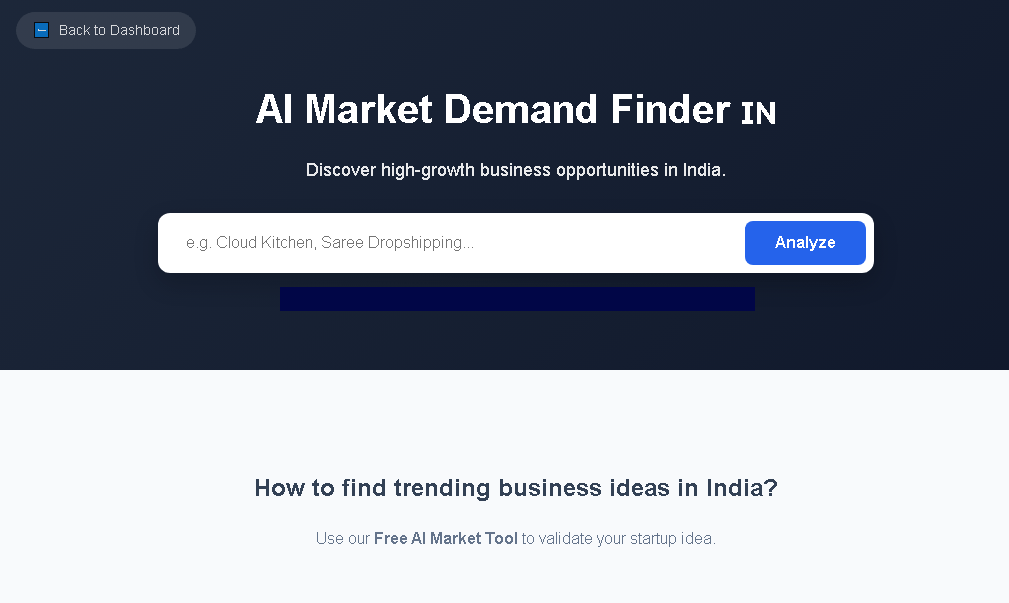
Leveraging AI‑driven platforms like BizplanAI pro—starting at just Rs. 299 per analysis—allows you to crunch massive datasets quickly, uncover hidden insights, and make data‑backed decisions without a heavy consultancy bill.
| Challenge | Impact on Market Entry | Mitigation Strategy |
|---|---|---|
| Price Sensitivity Across Income Segments | High price points can deter mass adoption, especially in Tier‑2 and Tier‑3 cities. | Adopt a tiered pricing model; use localized cost‑plus analysis. |
| Diverse Cultural Preferences | Regional festivals, language, and buying rituals influence product perception. | Conduct region‑specific focus groups; tailor messaging per state. |
| Regulatory Compliance (BIS, FSSAI, GST) | Non‑compliance leads to fines, product recalls, or bans. | Engage local compliance consultants; integrate compliance checks early. |
| Supply‑Chain Complexity | Logistics in remote areas increase lead times and costs. | Partner with pan‑India distributors; use AI‑optimised route planning. |
| Digital Penetration Gaps | While urban India is highly connected, rural segments rely on offline channels. | Blend online and offline sales strategies; use mobile‑first outreach. |
India is not a monolith. A product that thrives in Mumbai’s high‑income neighbourhoods may flop in a small town in Madhya Pradesh. Tailoring your research methodology to capture these micro‑differences ensures that product positioning, pricing, and promotion are optimised for each segment, maximising ROI.
| Methodology | Description | Best Practice for India |
|---|---|---|
| Quantitative Surveys (Online & Offline) | Large‑scale data collection to gauge demand, price willingness, and awareness. | Use bilingual questionnaires; combine mobile‑based surveys with face‑to‑face interviews in low‑internet zones. |
| Qualitative Focus Groups | Deep‑dive discussions to uncover motivations, cultural triggers, and product perception. | Conduct separate groups for different age brackets and linguistic regions; involve local moderators. |
| Conjoint Analysis | Statistical technique to understand trade‑offs consumers make between product features and price. | Incorporate region‑specific attributes (e.g., power backup for areas with frequent outages). |
| Social Listening & Sentiment Mining | Analyze social media chatter, forums, and review sites for organic feedback. | Focus on platforms popular in India like WhatsApp groups, Facebook, and regional forums. |
| Competitive Benchmarking | Systematic comparison of product features, pricing, distribution, and promotion against rivals. | Map competitors across online marketplaces (Amazon.in, Flipkart) and offline retail chains. |
| AI‑Driven Predictive Modelling | Leverage machine learning to forecast demand, churn, and market growth. | Use BizplanAI pro’s AI engine to process large datasets quickly and generate actionable forecasts. |
A mixed‑methods approach—combining quantitative breadth with qualitative depth—delivers a holistic view. For example, start with a nationwide survey to quantify demand, then drill down with focus groups in high‑potential regions to refine messaging. Finally, validate findings through social listening and AI‑driven predictive models.
| Resource / Tool | Type | Key Benefits for a Product |
|---|---|---|
| BizplanAI pro Market Check | AI‑powered analytics platform | Real‑time competitor tracking, demand forecasting, and price optimisation; starts at Rs. 299 per analysis. |
| CMIE Prowess | Database of macro‑economic indicators | Provides state‑wise GDP, consumption trends, and demographic data. |
| Statista India | Statistical portal | Access to industry reports, consumer behaviour surveys, and market size estimates. |
| Ministry of Statistics & Programme Implementation (MoSPI) | Government data source | Official data on population, urbanisation, and household expenditure. |
| Google Trends (India) | Search trend tool | Identify seasonal spikes and regional interest for product‑related keywords. |
| Amazon Seller Central Insights | E‑commerce analytics | Track product performance, reviews, and pricing dynamics on India’s largest marketplace. |
BizplanAI pro consolidates data from the above sources, applies natural language processing to social listening, and runs scenario‑based simulations. Its pay‑as‑you‑go model (starting at Rs. 299) makes it affordable for startups and established firms alike, eliminating the need for costly third‑party consultants.
Use the table below to identify key audience groups.
| Segment | Demographic Traits | Buying Behaviour |
|---|---|---|
| Urban Young Professionals | Age 25‑35, metros, high disposable income | Tech‑savvy, prefers online purchase, values convenience. |
| Middle‑Income Families | Age 30‑50, Tier‑2/3 cities, dual income | Price‑sensitive, seeks value packs, mixes online/offline. |
| Rural Homemakers | Age 20‑45, villages, lower income | Relies on local retailers, trusts word‑of‑mouth, prefers cash transactions. |
| Enterprise Buyers | Companies >50 employees, pan‑India | Bulk procurement, compliance focus, long‑term contracts. |
For a confidence level of 95% and a margin of error of ±5%, a sample of roughly 385 respondents is statistically sufficient. However, to capture regional diversity, aim for 1,000‑1,500 respondents distributed across states and urban‑rural divides.
Adhere to the Information Technology (Reasonable Security Practices and Procedures and Sensitive Personal Data or Information) Rules, 2011. Obtain explicit consent, anonymise personal identifiers, and store data on secure servers located within India.
Yes. While urban consumers are reachable online, a significant portion of the Indian market (especially Tier‑2/3 and rural areas) still relies on offline channels. Combining both methods yields a more accurate picture.
BizplanAI pro leverages AI to process massive datasets in minutes, offering real‑time competitor tracking, demand forecasting, and price optimisation at a fraction of the cost of conventional agencies. Its pay‑as‑you‑go pricing (starting at Rs. 299) makes it accessible for startups and SMEs.
Key performance indicators (KPIs) include:
Core elements—objective definition, segmentation, mixed‑methods data collection, and AI‑driven analysis—are reusable. However, each product may require specific tweaks (e.g., different regulatory checks or feature‑specific conjoint attributes).
Given India’s fast‑changing consumer trends, conduct a full refresh annually and a lighter pulse survey every 6 months to capture emerging shifts.
Culture influences buying cycles (e.g., festival‑driven spikes), preferred communication channels, and product feature relevance. Tailoring messaging to regional languages and cultural symbols can boost brand resonance dramatically.
Typically, allocate 5‑10% of the total product development budget to research. For a product with a development cost of Rs. 10 million, a research budget of Rs. 0.5‑1 million is prudent.
Beyond government portals, explore industry associations, trade publications, and specialized databases like Statista India. BizplanAI pro aggregates many of these sources, delivering a single, searchable interface.
It uncovers consumer preferences, competitive gaps, pricing sensitivities, and regulatory nuances, reducing risk and guiding product‑market fit.
Target audience profiling, demand sizing, competitor analysis, pricing studies, and distribution channel assessment.
Rapid urban growth creates higher disposable incomes, faster adoption of technology, and a preference for convenience‑driven products.
A mix of online surveys, focus groups, mobile ethnography, and secondary data from government and industry reports.
It identifies regional cultural nuances, language preferences, and localized price points, enabling tailored marketing and distribution strategies.