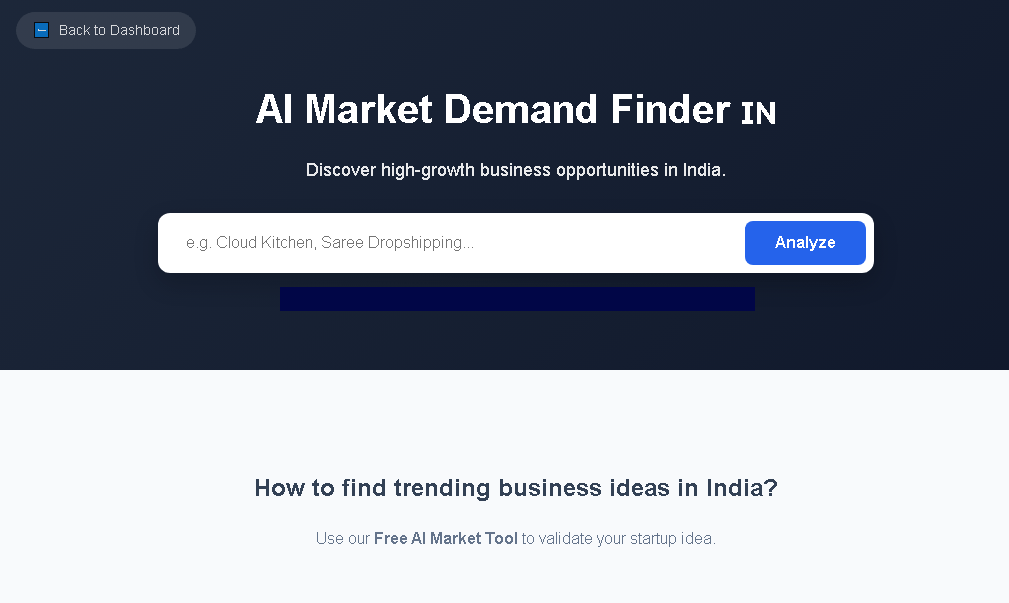
India's service sector, contributing over 50% to the country's GDP, is a dynamic and competitive landscape. From IT-enabled services to hospitality and healthcare, understanding market dynamics is critical for businesses aiming to thrive. Effective market research for services in India requires addressing unique challenges like regional diversity, regulatory compliance, and evolving consumer preferences. This article explores tailored methodologies, tools, and actionable steps to conduct impactful research in this high-growth market.
Conducting market research for services in India demands a nuanced approach due to cultural, regulatory, and infrastructural factors. Below are key challenges specific to this market:
| Challenge | Description |
|---|---|
| Regional Language Barriers | Over 22 scheduled languages require localized surveys and multilingual data collection tools. |
| Regulatory Fragmentation | Varying state-level policies (e.g., GST compliance) complicate uniform service delivery analysis. |
| Urban-Rural Demand Disparity | Service adoption rates differ drastically (e.g., 75% urban vs. 30% rural mobile internet penetration). |
| FDI Policy Complexity | Restrictions on foreign ownership in sectors like retail and healthcare require sector-specific compliance checks. |
Identifying the right audience segments is crucial for service businesses. Here are key demographics and psychographics:
| Segment | Characteristics | Preferred Channels |
|---|---|---|
| Urban Millennials | Digitally savvy, price-sensitive, 20-35 years | Social media, mobile apps |
| Small Business Owners | MSMEs in Tier 2-3 cities, 30-50 years | WhatsApp, local trade associations |
| Corporate Clients | Large enterprises in IT/finance sectors | LinkedIn, B2B events |
| Healthcare Consumers | Private vs. public service users, rural/urban | Community health workers, teleconsultations |
Effective methodologies must combine quantitative and qualitative approaches tailored to India's context:
| Method | Application | Best Practices |
|---|---|---|
| Mobile-First Surveys | Capture real-time feedback via SMS/OTT platforms | Keep response time under 2 minutes, use vernacular language options |
| Ethnographic Studies | Observe service delivery in local contexts (e.g., tea stalls, clinics) | Partner with local researchers for cultural insights |
| Competitor Benchmarking | Analyze pricing, service quality, and digital presence | Use tools like BizplanAI Pro for AI-driven competitor analysis |
| Social Listening | Monitor sentiment on platforms like Twitter and Facebook | Track regional hashtags and sentiment in Hindi/other languages |
These tools are essential for data collection and analysis in India's service sector:
| Tool | Description | Cost (INR) |
|---|---|---|
| BizplanAI Pro | AI-powered platform for analyzing market trends, competitor data, and consumer behavior | Starting at ₹299/month (pay-as-you-go) |
| DataMile | Provides consumer spending data across 250+ Indian cities | ₹50,000+ for reports |
| Statista India | Industry statistics and forecasts for services sectors | ₹15,000/year subscription |
| Google Surveys (India) | Trending opinions and preferences among smartphone users | Free (with payment for premium insights) |
| Trend | Impact | Leading Players |
|---|---|---|
| Digital Transformation | 60% of service businesses now use cloud-based solutions | Infosys, Wipro |
| Skill Development Services | Government's PMKVY program trains 10M+ candidates annually | NIIT, UpGrad |
| Health Tech Services | Telemedicine users surged to 50M+ post-pandemic | 1mg, Practo |
| Greenwashing Concerns | Consumers now prefer eco-friendly service providers | Oyo Rooms, MakeMyTrip |
| Metric | Definition | Tools for Measurement |
|---|---|---|
| Customer Satisfaction Index (CSI) | Net Promoter Score (NPS) tailored for service quality | Callsense, SurveySparrow |
| Service Adoption Rate | Penetration in target segments (urban vs. rural) | BizplanAI Pro, Google Data Studio |
| Cost per Acquisition (CPA) | Marketing efficiency in service sectors | Facebook Ads Manager, Google Analytics |
| Regulatory Compliance Score | Adherence to FSSAI, GST, and labor laws | LegalWiz, BizplanAI Pro |
A: Use AI tools like BizplanAI Pro to map competitors by geography and service type. For example, in food delivery, identify local players alongside national chains like Swiggy and Zomato.
A: For urban services, aim for 1,000+ respondents across 5+ cities. For rural services, ensure 500+ samples in 10+ villages to capture regional diversity.
A: Comply with the Personal Data Protection Bill, 2023. Use encrypted data collection tools and obtain explicit consent from participants.
A: Use NLP tools integrated in BizplanAI Pro to identify thematic patterns in customer feedback, especially for multilingual datasets.
A: For tech services, monthly updates are recommended. For traditional sectors like hospitality, quarterly analysis suffices.
By leveraging tools like BizplanAI Pro, businesses can gain actionable insights into India's service sector at just ₹299/month. Start your research journey today and stay ahead of the competition.
Market research helps businesses navigate India's competitive service sector by understanding regional diversity, regulatory requirements, and shifting consumer preferences to tailor strategies effectively.
Challenges include regional linguistic/cultural diversity, complex regulatory compliance, and rapidly evolving consumer expectations driven by digital adoption and urbanization.
Regional diversity affects consumer behavior, language preferences, and service demand. Research must account for localized needs through targeted sampling and culturally relevant data collection methods.
Tools include online surveys, social media analytics, focus groups, and AI-driven sentiment analysis to capture real-time consumer insights across urban and rural markets.
Businesses must leverage continuous market research to track trends, invest in digital transformation, and prioritize personalized service offerings aligned with evolving customer expectations.