Targeted Audience
Mastering Your Target Audience: The Blueprint for Precision Marketing in 2026
In the hyper-competitive digital landscape of 2026, the era of “spray and pray” marketing is officially dead. Businesses that attempt to speak to everyone often find themselves speaking to no one. Instead, the most successful brands are those that master the art of the targeted audience. By focusing your resources on a specific group of consumers or businesses most likely to convert, you stop wasting budget on disinterested parties and start building genuine, profitable relationships.
According to Salesforce, a target audience is a specific group of consumers or businesses that a company aims to reach with its marketing efforts, based on shared demographics, needs, or behaviors. This strategic focus is not merely a suggestion; it is a financial imperative. Organizations using Salesforce report that companies that use data to personalize their marketing see a 10% to 30% increase in sales. When you align your messaging with the specific pain points and desires of your ideal customer, you move from being a commodity to being a solution.
Whether you are a startup or a global enterprise, understanding exactly who you are serving is the foundation of every high-performing digital strategy. It allows you to craft messages that resonate, select the right channels for engagement, and ultimately drive higher returns on your marketing investment. If you are ready to refine your approach, it is time to look at the data-driven methods that turn casual browsers into loyal brand advocates.
Defining the Core of Your Market Strategy
Before you launch a single campaign, you must clearly define who is on the other side of the screen. According to Wikipedia, the target audience is the intended audience or readership of a publication, advertisement, or other message catered specifically to the previously intended. This definition highlights the necessity of intentionality in your creative process.
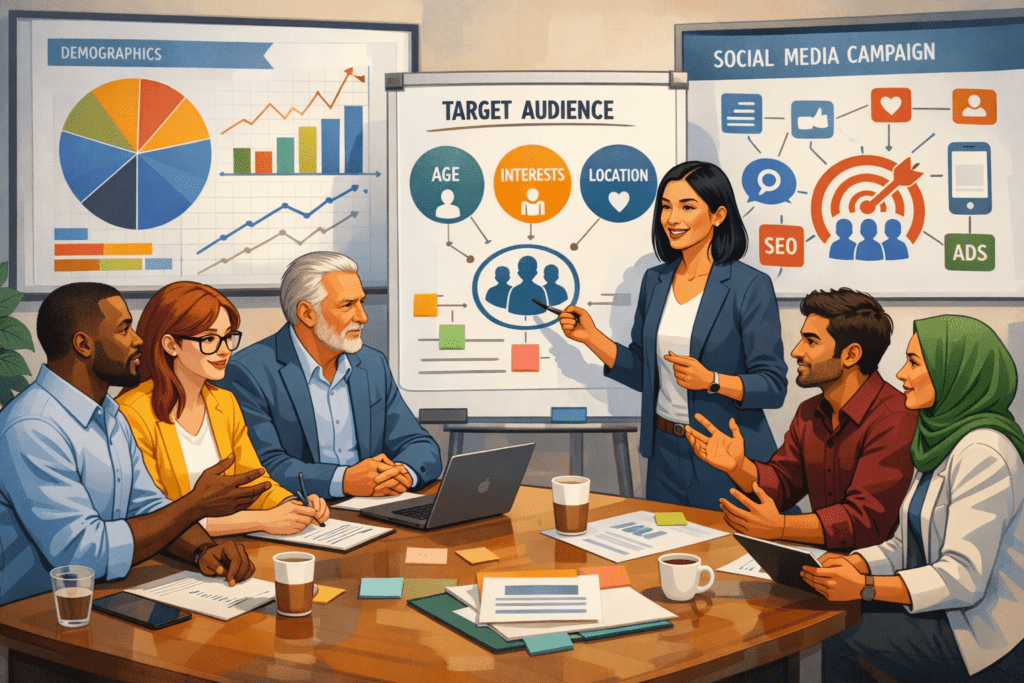
Think of your marketing as a conversation. If you walk into a room and shout, you might get attention, but you won’t get a meaningful response. If you identify the people in the room who actually need your help—and speak to them directly—the conversation transforms. This is the power of audience targeting, which allows you to segment your audience into groups based on criteria such as behavioral characteristics, demographics, and interests, according to Adobe. A targeted audience is more likely to engage with personalized content, and data-driven marketing strategies are key to creating targeted audience segments.
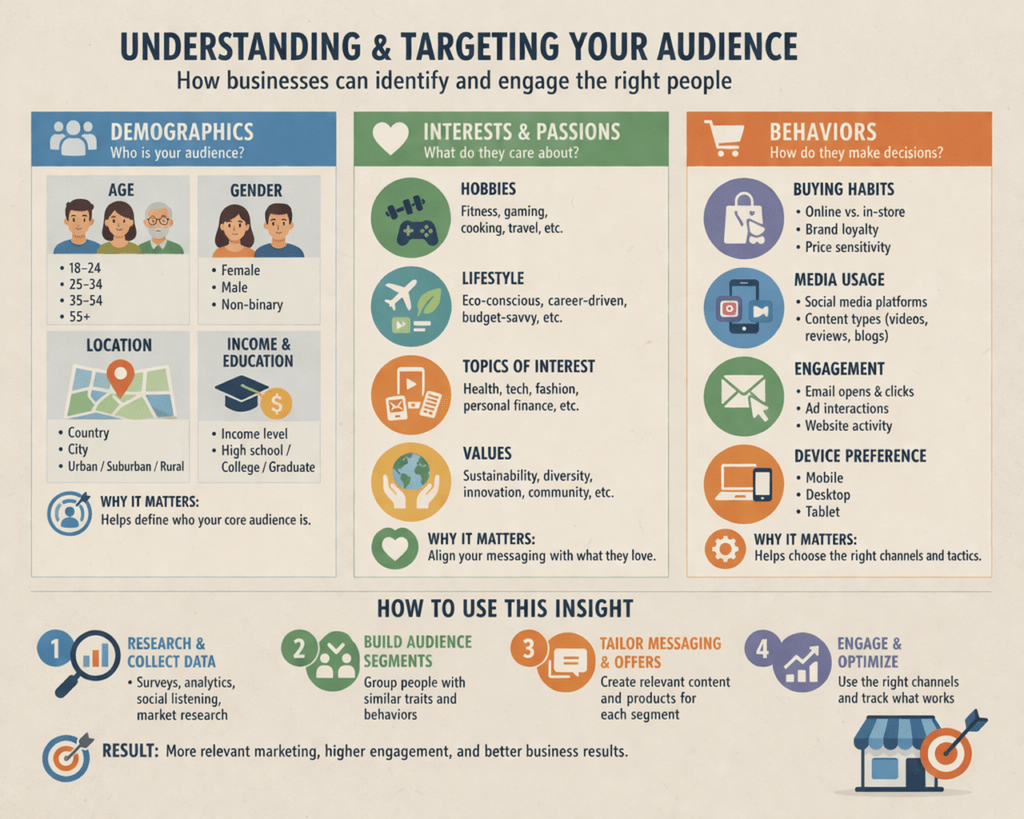
- Demographics: Age, gender, location, and income levels.
- Behavioral Data: Past purchase history, website engagement, and interaction frequency.
- Psychographics: Values, lifestyle choices, and personal interests.
- Intent Signals: Current search behavior and immediate needs identified by Criteo.
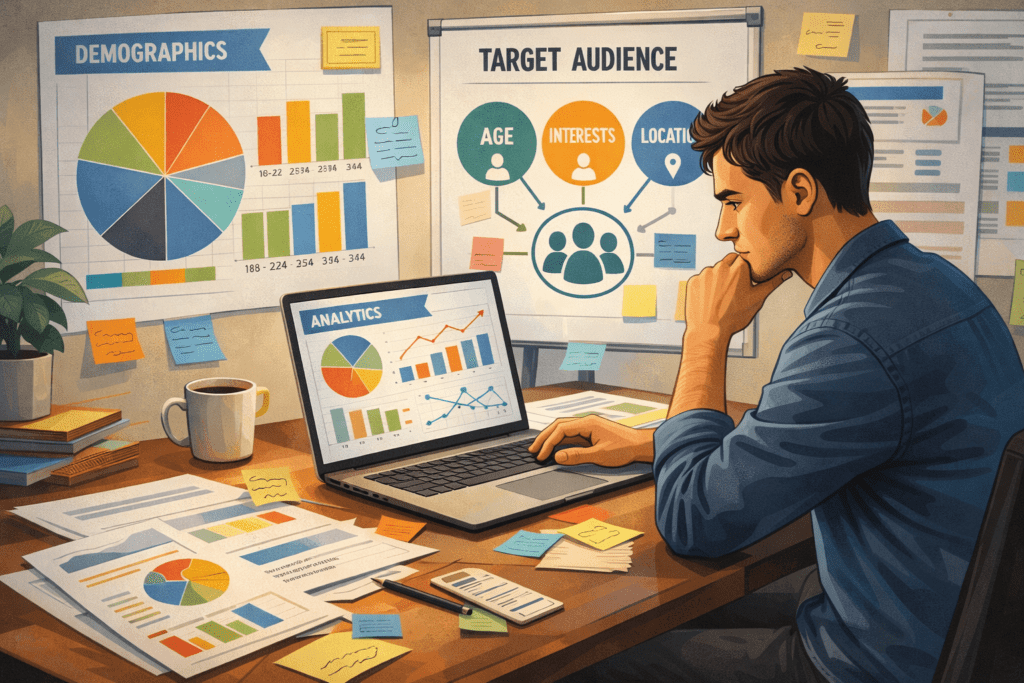
By leveraging tools like Lotame or Adobe, you can move beyond guesswork. You can analyze raw data to build a targeted audience profile, which is a specific group of customers most likely to respond positively to your promotions, products, and services (IRE Journals). Are you currently utilizing your CRM data to its full potential, or are you flying blind? Now is the time to audit your data collection methods.
The Financial Impact of Personalization
Why should you care about narrowing your focus? The answer lies in the bottom line. Modern consumers have high expectations; they demand relevance. Organizations using Mailchimp report that 77% of consumers have chosen, recommended, or paid more for a brand that provides a personalized service or experience. When you treat your audience as a monolith, you ignore the nuanced needs that drive purchasing decisions.
Personalization is the bridge between a cold lead and a converted customer. When a user feels that a brand “gets” them, the psychological friction of the purchase process decreases. This is why customer segmentation is not just a marketing tactic; it is a core business strategy. By dividing your potential customers into smaller, manageable groups, you can tailor your value propositions to match their specific stage in the customer journey.
Consider the difference between a generic blast email and a targeted sequence. The former is often relegated to the spam folder, while the latter feels like a helpful nudge. Using platforms like Mailchimp, you can automate these personalized touchpoints, ensuring that your message reaches the right person at the exact moment they are ready to engage. If your conversion rates are stagnating, consider whether your content is personalized enough to trigger action.
Omnichannel vs. Multichannel: Reaching the Right People
Many businesses confuse being “everywhere” with being effective. This is the difference between multichannel and omnichannel marketing. Multichannel marketing is about being present on multiple platforms—social media, email, web, and print—to reach your audience. However, if these channels are siloed, the customer experience becomes fragmented and disjointed.
Omnichannel marketing, by contrast, creates a seamless experience across all touchpoints. It recognizes that your audience might discover your brand on a mobile device, research it on a desktop, and finalize the purchase in-store. By maintaining a consistent, data-backed understanding of your target audience, you ensure that the narrative remains intact regardless of the medium.
- Consistency: Your brand voice and value proposition must remain uniform.
- Data Integration: Use tools like Salesforce to unify customer data across all channels.
- Contextual Relevance: Adjust your messaging to fit the medium without losing the core intent.
Ask yourself: Does your customer experience feel like a single conversation, or does it feel like different departments are shouting different messages? An integrated approach, supported by robust analytics, is the only way to scale effectively in 2026.
B2B vs. B2C: Adapting Your Targeting Approach
The principles of audience targeting remain consistent, but the application differs significantly between B2B and B2C environments. In B2C, the focus is often on emotional triggers, lifestyle alignment, and immediate gratification. Brands like H&M or Zara excel here by understanding the fast-paced, trend-driven nature of their audience.
In B2B, the focus shifts toward logic, ROI, and long-term partnership. The buying cycle is longer, and the decision-making unit is often a committee rather than an individual. You aren’t just selling to a person; you are selling to a business objective. Your content must demonstrate how your product solves a specific, high-stakes problem for the organization.
Regardless of the model, the goal remains the same: identify the decision-maker and speak to their specific needs. Using collaborative tools like Miro can help your team map out these complex buyer journeys, ensuring that every piece of content created serves the ultimate goal of moving the prospect closer to a decision.
Comparison of Marketing Tools for Audience Management
Selecting the right stack to manage your audience data is critical for operational efficiency. Below is a comparison of tools that help facilitate effective audience targeting.
| Tool | Primary Function | Best For |
|---|---|---|
| Salesforce | CRM & Customer Data | Enterprise-level B2B and B2C relationship management |
| Mailchimp | Email & Automation | Small to mid-sized businesses focused on personalized outreach |
| Criteo | Ad Retargeting | Driving conversions via intent-based advertising |
| Adobe | Experience Cloud | Advanced data-driven personalization at scale |
| Lotame | Data Management | Audience discovery and data enrichment |
| Miro | Visual Collaboration | Mapping customer personas and journey strategies |
Frequently Asked Questions
What do you mean by targeted audience?
A targeted audience refers to the specific group of individuals or businesses that a company identifies as the most likely buyers of its products or services. Instead of trying to appeal to the general public, a business narrows its focus to a segment that shares common characteristics, such as demographics, purchasing behaviors, or specific pain points.
By focusing on this group, marketing efforts become more efficient and cost-effective. You are no longer casting a wide net; you are using a spear to reach the people who are actually interested in what you offer. This approach results in higher engagement, better conversion rates, and a stronger return on investment for your advertising spend.
What are the 7 types of audiences?
In various marketing and psychological frameworks, audiences are often categorized by their behavioral traits and motivations. The seven common types include Essentialists, Connection-seekers, Experience-chasers, Comfort-zoners, Introverts, Onliners, and the Social-savvy.
Understanding these archetypes helps marketers tailor their messaging. For example, a “Connection-seeker” will respond better to community-focused content, whereas an “Experience-chaser” will be more motivated by exclusive events or unique product trials. Identifying which of these types makes up the bulk of your customer base allows for highly nuanced communication strategies.
Who is Zara’s target audience?
Zara’s target audience consists primarily of fashion-conscious individuals who value trendy, high-style clothing at accessible price points. They focus on younger to middle-aged consumers—typically aged 18 to 40—who are highly aware of global fashion trends and want to update their wardrobes frequently.
This audience is characterized by a desire for “fast fashion” and a willingness to engage with both digital and physical retail environments. Because Zara leverages data to track what is moving in their stores, they are able to keep their inventory aligned with the immediate, changing tastes of this specific demographic, ensuring that their product offerings remain relevant and highly desirable.
What is your target audience example?
A classic example of a target audience would be a software company selling project management tools. Their target audience is not “everyone who works.” Instead, it is “Project Managers and Team Leads in mid-sized tech companies who are struggling with remote team collaboration.”
By defining the audience this specifically, the company can create content that addresses the exact frustrations of remote work, such as missed deadlines or communication silos. The marketing message would focus on solving these specific problems, making the product appear as a necessary solution rather than just another generic tool.
What are the 4 types of audience?
When analyzing how an audience receives a message, experts often categorize them into four types: friendly, neutral, uninterested, and hostile. A friendly audience is already on your side; they are receptive to your message and likely need little convincing.
A neutral audience is undecided or indifferent and requires facts and logical arguments to be swayed. An uninterested audience lacks the time or attention to care, so your strategy must be to hook them quickly with a strong value proposition. Finally, a hostile audience is actively opposed to your message, requiring a highly empathetic and evidence-based approach to even begin a dialogue.
Conclusion
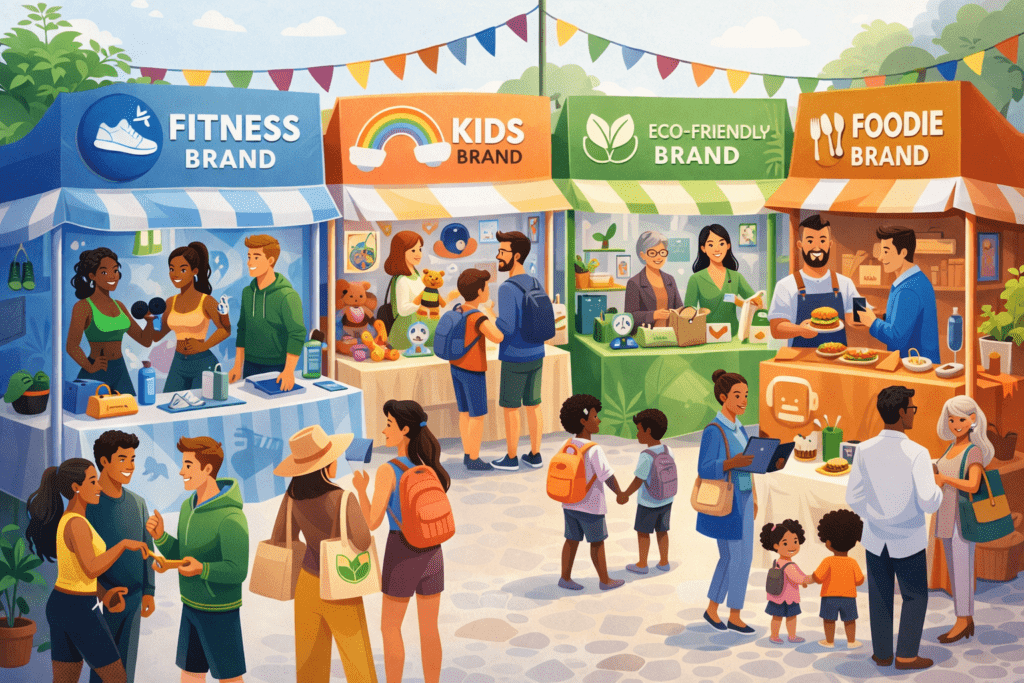
Mastering your target audience is the single most effective way to improve your marketing performance in 2026. By shifting your focus from volume to precision, you align your resources with the people who are most likely to value your solutions. As we have explored, using data-driven insights from platforms like Salesforce and Adobe allows you to move beyond assumptions and into a realm of highly personalized, high-converting communication.
Remember that your audience is not static. Their needs, behaviors, and preferences will evolve alongside the market. Continuous market research and a commitment to analyzing your customer segments are the keys to long-term success. Do not settle for broad-reach campaigns that drain your budget without delivering results. Take the time to audit your current strategy, define your ideal customer profile, and start speaking directly to the people who matter most to your business growth. Start refining your targeting today to see the difference in your conversion metrics tomorrow.

R. Sharma is a senior startup advisor and business planning specialist at BizPlan AI Pro. With over a decade of experience in Indian corporate finance and MSME consulting, he has helped hundreds of founders structure financial projections and secure bank funding.