Business Coach For Entrepreneurs

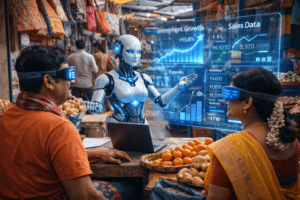
Ask any small business owner in Surat’s textile market or a D2C founder in Bengaluru what keeps them up at night, and you’ll hear a familiar refrain: they know their product, they know their customers, but they’re flying blind when it comes to scaling. This is precisely the gap a business coach for entrepreneurs is meant to fill — except for decades, that kind of guidance was locked behind a price tag most Indian MSMEs simply couldn’t justify.
Traditional business consulting in India has always carried an air of exclusivity. A seasoned strategy consultant might charge anywhere between ₹15,000 to ₹50,000 per session, with retainer engagements easily crossing ₹2-5 lakh a month. For a bootstrapped startup founder or a family-run manufacturing unit in Coimbatore, that’s not a line item — it’s a luxury reserved for companies that have already “made it.” Yet these are exactly the businesses that need structured mentorship the most, right when they’re trying to move from ₹50 lakh in annual revenue to ₹5 crore, or from a two-person team to a functioning organisation.
The Scaling Problem Nobody Talks About
India’s MSME sector contributes roughly 30% to the country’s GDP and employs over 11 crore people, yet a staggering number of these businesses plateau within their first five years. The reasons are rarely about a bad product or lack of hustle. They’re structural:
- No access to strategic thinking — owners are so buried in daily operations that they never step back to plan
- Inconsistent marketing execution — knowing Instagram ads exist is different from knowing how to run them profitably
- Financial blind spots — cash flow mismanagement kills more small businesses than competition does
- Isolation in decision-making — solo founders and family businesses often have no sounding board for critical calls
- Language and accessibility barriers — most quality business coaching content and consultants operate in English, alienating a huge chunk of Tier 2 and Tier 3 India
Startups face a slightly different flavour of the same problem. They might have funding and a slick pitch deck, but founders often lack the operational maturity to translate a good idea into a repeatable, scalable business model — and a single wrong hire or missed pivot can burn through months of runway.
Why Digital Mentoring Is Changing the Game
This is where digital mentoring for entrepreneurs in India has quietly started rewriting the rules. Instead of scheduling a consultant three weeks out and paying for their travel and time, founders can now access strategic guidance the moment they need it — at 11 PM before a big client pitch, or on a Sunday while reworking their pricing model.
An AI-powered business coach essentially compresses years of consulting frameworks, marketing playbooks, and operational best practices into a mentor that’s available around the clock. It’s not about replacing human judgment — it’s about making the kind of structured thinking that used to cost lakhs of rupees available to anyone with a smartphone and a business idea.
| Traditional Business Consulting | AI-Powered Digital Coaching |
|---|---|
| ₹15,000–₹50,000+ per session | Fraction of the cost, often subscription-based |
| Limited availability, scheduled weeks in advance | 24/7 access, instant responses |
| Typically English-only | Available in Hindi and English |
| Generalised advice, one-size-fits-all | Personalized to business stage and sector |
| Consultant’s personal bandwidth limits scale | Infinitely scalable across thousands of founders |
Built for the Realities of Indian Business
What makes this shift genuinely relevant for India isn’t just the cost savings — it’s the localisation. A kirana store owner in Lucknow and a SaaS founder in Pune are dealing with entirely different challenges, and a one-size-fits-all coaching approach was never going to work even when it was affordable. Modern AI coaching platforms are built to segment guidance by business type — MSMEs, early-stage startups, and established enterprises each get frameworks suited to where they actually are, not generic startup-culture advice lifted from Silicon Valley playbooks.
This introduction is really the starting point for a larger conversation: how exactly does an AI business coach work, what problems can it genuinely solve for Indian entrepreneurs, and where does it fit alongside human expertise rather than against it. That’s what the rest of this guide sets out to unpack.
Why Every Entrepreneur Needs a Business Coach in Today’s Market
India’s MSME sector isn’t the sleepy, slow-moving space it was a decade ago. With over 6.3 crore registered MSMEs contributing nearly 30% to the country’s GDP, the competition for customers, capital, and talent has become brutal. A kirana store owner in Indore is now competing with quick-commerce apps. A D2C skincare founder in Bengaluru is fighting for the same Instagram ad rupee as fifty other brands. In this environment, gut instinct and “jugaad” alone don’t cut it anymore — you need structured thinking, and that’s precisely where business coaches for entrepreneurs earn their keep.
The Real Cost of Poor Business Decisions
Most founders don’t fail because they lack passion or work ethic. They fail because of decisions made in isolation — without a sounding board, without data, without someone asking the uncomfortable questions before the money is spent.
Consider what poor decision-making actually costs an Indian small business:
- Cash flow mismanagement: A study by the Ministry of MSME found that delayed payments and poor working capital planning are among the top three reasons Indian MSMEs shut shop within their first five years.
- Wrong hiring calls: Replacing a single bad mid-level hire can cost a small business upwards of ₹3-5 lakh once you factor in recruitment, training, and lost productivity.
- Misdirected marketing spend: Founders often burn ₹50,000-₹2 lakh on ad campaigns with no clear positioning strategy, chasing vanity metrics instead of conversions.
- Delayed pivots: Businesses that stick to a failing model for even 6-8 months longer than necessary lose the runway needed to try a second approach.
None of these mistakes happen because founders are careless. They happen because there’s no one in the room to pressure-test the decision before it’s made. This is the exact gap that business coaching for startups is designed to close.
Why the Old Playbook Doesn’t Work Anymore
A decade ago, an entrepreneur could rely on trial and error, industry contacts, and slow, organic learning. Today’s market moves too fast for that luxury.
- Customer acquisition costs on digital platforms have risen 60-80% over the last three years for most Indian D2C and service categories.
- GST compliance, changing labour codes, and evolving digital payment norms mean operational knowledge goes stale within months.
- Competitors — often venture-funded — can outspend bootstrapped founders on marketing and talent, forcing MSMEs to be smarter, not just harder-working.
This is why founders across Tier 1, Tier 2, and even Tier 3 cities are actively seeking structured mentorship rather than figuring things out purely through experience.
How Business Coaching Actually Accelerates Growth
A good coach — human or AI-powered — doesn’t hand you a generic playbook. They help you build a decision-making framework specific to your business stage and sector.
For early-stage startups:
- Validating product-market fit before burning capital
- Structuring pricing and unit economics correctly from day one
- Building investor-ready narratives and financial models
For growing MSMEs:
- Streamlining operations to reduce wastage and delays
- Setting up basic systems for inventory, HR, and finance
- Identifying the right digital channels for customer acquisition
For established businesses looking to scale:
- Diversifying revenue streams and entering new markets
- Building leadership teams that don’t depend entirely on the founder
- Using data to make expansion decisions rather than assumptions
| Business Stage | Primary Coaching Focus | Typical Outcome |
|---|---|---|
| Idea/Early Startup | Validation, pricing, positioning | Faster path to first paying customers |
| Growing MSME | Operations, marketing ROI, cash flow | Improved margins, reduced errors |
| Established Business | Scaling, delegation, market expansion | Sustainable growth without founder burnout |
Where AI Business Consulting for Startups Changes the Equation
Traditional coaching has always had a barrier: cost and access. A seasoned business consultant in India typically charges anywhere between ₹5,000 to ₹25,000 per session, putting consistent mentorship out of reach for most bootstrapped founders and small-town MSMEs.
This is where ai business consulting for startups is rewriting the rules. An AI-driven business coach doesn’t charge by the hour, doesn’t need to be booked two weeks in advance, and doesn’t disappear once the session ends. It’s available at 11 PM when you’re finalising a pricing sheet, or at 7 AM when you’re deciding whether to onboard that new distributor. More importantly, it can be customised to your specific industry — whether you run a textile export unit in Surat, a SaaS startup in Pune, or a food processing MSME in Ludhiana — and respond in the language you’re most comfortable in, Hindi or English.
The value isn’t in replacing human judgment. It’s in giving every entrepreneur — regardless of city, capital, or network — access to the kind of structured strategic thinking that was once reserved for founders who could afford a ₹50,000-a-month advisory retainer.
Traditional Business Coaching vs. AI Business Coach: A Comparative Analysis
Ask any founder in Coimbatore or Kanpur what stopped them from hiring a business coach, and the answer is almost always the same: money and access. A decent business consultant in India charges anywhere between ₹5,000 to ₹25,000 per session, and the good ones — the ones with actual sector experience — are booked out weeks in advance. For a bootstrapped MSME owner trying to figure out GST compliance while also managing inventory and a WhatsApp Business account, that math simply doesn’t work.
This is where the conversation around business coach AI platforms has shifted from novelty to necessity. It’s not about replacing human wisdom — it’s about closing the massive accessibility gap that traditional coaching has left wide open for India’s 6.3 crore MSMEs.
Let’s break down exactly where these two models diverge.
Cost: The Biggest Barrier for Indian MSMEs
Traditional business coaching operates on a retainer or per-session model that rarely makes sense for a small business with thin margins.
- A mid-tier business consultant in Tier 1 cities typically charges ₹15,000–₹50,000 per month for ongoing advisory
- Specialized coaches (export strategy, D2C scaling, franchise models) can charge ₹1 lakh+ for a single workshop
- Most engagements require a minimum 3–6 month commitment, regardless of whether you need continuous support
An AI Digital Coach flips this entirely. Most platforms operate on subscription pricing that costs a fraction of a single human coaching session — often less than what a business owner spends on internet connectivity each month. For a kirana store owner or a small manufacturing unit in Ludhiana, that’s the difference between getting expert guidance and going without it entirely.
Availability and Time Zones
Human coaches work within business hours — understandably so. But entrepreneurship in India doesn’t run on a 9-to-6 schedule. A trader dealing with international clients in the US or a D2C brand owner packing orders at 11 PM doesn’t have the luxury of waiting for Monday’s scheduled call.
| Factor | Traditional Human Coach | AI Business Coach |
|---|---|---|
| Availability | Fixed business hours, appointment-based | 24/7, instant access |
| Response Time | Days to weeks for scheduling | Immediate |
| Language Support | Usually one language, city-dependent | Hindi, English, and regional flexibility |
| Cost per Session | ₹5,000–₹25,000+ | Fraction of subscription cost, unlimited use |
| Scalability | One coach, limited client capacity | Unlimited simultaneous users |
| Consistency | Varies by coach’s mood, bandwidth, bias | Consistent, data-backed guidance every time |
This isn’t a knock on human coaches — their depth of relationship-building and intuition remains invaluable in certain contexts. But for the day-to-day operational, strategic, and marketing questions that MSMEs face constantly, waiting isn’t an option most businesses can afford.
Scalability: Where AI Genuinely Outperforms
Here’s something rarely discussed in a business coach AI platform comparison: a human coach, no matter how skilled, can only serve a finite number of clients meaningfully. Most experienced consultants cap their client roster at 15–20 businesses to maintain quality. That inherently limits how much of India’s MSME sector — which contributes roughly 30% of GDP — can ever access quality mentorship.
AI coaching platforms don’t have this ceiling. Whether it’s 50 users or 50,000, the guidance quality doesn’t dilute. A textile exporter in Surat and a tech startup founder in Bengaluru can both get instant, tailored input on cash flow management or customer acquisition at the exact same moment, without either getting a “lesser” version of the coaching experience.
Personalization: Debunking the “One-Size-Fits-All” Myth
There’s a common assumption that human coaches are inherently more personalized, while AI is generic. In practice, this depends heavily on the platform’s design.
- Traditional coaches bring personalization through lived experience and industry networks, but their advice is often shaped by the specific sectors they’ve personally worked in — a coach who’s built a manufacturing business may struggle to advise a SaaS startup with equal depth
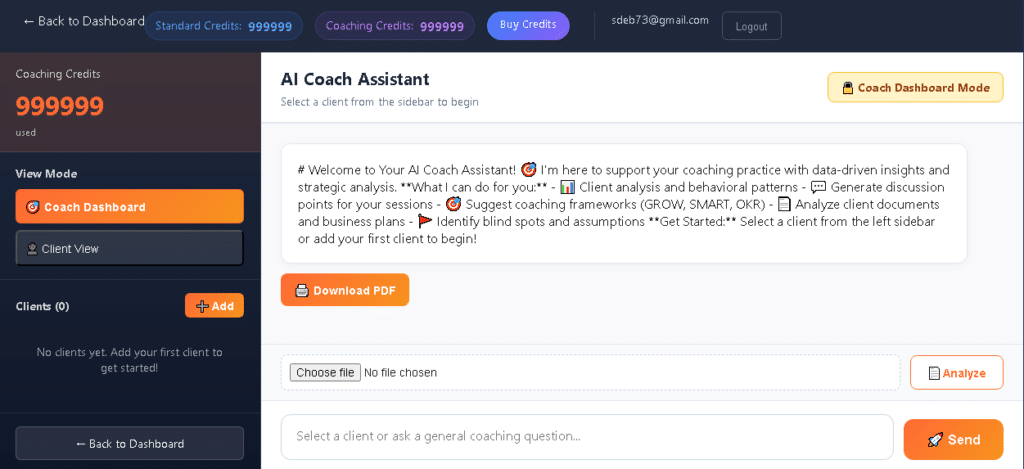
- A well-built AI Digital Coach draws from a far broader dataset across sectors, and — critically — can be customized to segment its guidance based on business stage and type:
For early-stage startups: Focus areas around product-market fit, fundraising narratives, and lean operations
For growing MSMEs: Emphasis on working capital management, vendor negotiations, and digital marketing on a budget
For established businesses: Strategic guidance on diversification, team scaling, and market expansion
This segmentation matters enormously. A one-size-fits-all coaching approach — human or AI — fails businesses at different maturity stages. The advantage of a customizable AI platform is that it can be configured to recognize whether it’s speaking to a first-time founder or a 15-year-old family business looking to modernize, and adjust its tone, depth, and recommendations accordingly.
Where Traditional Coaching Still Holds Ground
To be fair, human coaches offer something AI hasn’t fully replicated yet: the accountability of a real relationship, nuanced negotiation coaching, and the ability to read unspoken hesitation in a founder’s voice during a tough conversation. For high-stakes situations — a difficult co-founder dispute, a major investor negotiation — many entrepreneurs still value having a human in the room.
The realistic takeaway isn’t “AI versus human” — it’s understanding that for the volume and velocity of day-to-day decisions an entrepreneur faces, an AI Digital Coach fills a gap that traditional coaching was never structurally built to fill for India’s MSME base. Used together — AI for continuous, instant guidance, and human coaches for high-stakes strategic moments — businesses get the best of both worlds without the financial strain of choosing one exclusively.
How an AI Business Coach Works for Indian MSMEs
Most business owners we speak with picture “AI coaching” as some kind of chatbot spitting out generic advice copied from a textbook. That’s not how a well-built AI Digital Coach actually functions, and understanding the difference matters before you decide whether to bring one into your business.
Think of it less like a chatbot and more like a business analyst who’s read thousands of case studies, never sleeps, and has memorized every conversation you’ve ever had with it. That’s the practical reality of how a business coach for MSME operations works today, and the mechanics behind it are worth unpacking.
The Bilingual Advantage: Hindi, English, and Everything In Between
India’s MSME sector doesn’t run on English alone. A textile trader in Surat, a dairy farmer-turned-entrepreneur in Anand, or a hardware store owner in Kanpur often thinks through problems in Hindi (or a Hindi-English mix) even if they can read English business terms.
A properly designed AI Business Coach handles this through:
- Natural language processing tuned for Hinglish — so you can type “mera cash flow tight ho gaya hai, kya karu” and get a coherent, actionable response rather than a translation error.
- Context-aware switching — the coach doesn’t force you into one language; it follows your lead mid-conversation.
- Regional business terminology recognition — understanding terms like “udhaar,” “bahi khata,” or “GST input credit” without needing you to rephrase in formal English.
This isn’t a cosmetic feature. Language comfort directly affects whether an entrepreneur actually opens the app and asks the hard questions, or avoids it out of hesitation.
Instant, Personalized Guidance — Not Generic Templates
The core mechanic that separates a real AI coach from a glorified search engine is personalization based on your specific business data, not broad industry advice.
Here’s roughly how it works behind the scenes:
- Onboarding intake — you input basic details: industry, revenue range, team size, current challenges (inventory, marketing, hiring, cash flow, etc.)
- Contextual questioning — the coach asks follow-up questions the way a good consultant would, narrowing down the actual problem rather than assuming
- Recommendation generation — advice is drawn from patterns across similar Indian MSMEs, adjusted for your sector, city tier, and growth stage
- Actionable next steps — instead of vague strategy talk, you get specific, executable tasks with timelines
| Traditional Consultant | AI Business Coach |
|---|---|
| Appointment scheduling, delays of days/weeks | Available instantly, 24/7 |
| ₹5,000–₹25,000+ per session | Fraction of the cost, often subscription-based |
| Generic frameworks applied broadly | Recommendations tailored to your specific data inputs |
| Limited availability post-engagement | Continuous access for follow-up questions |
Data-Driven Insights, Not Guesswork
A meaningful AI Digital Coach doesn’t just “chat” — it analyzes. When connected to your sales data, inventory records, or basic financial inputs, it can flag patterns a busy owner might miss:
- Seasonal dips in specific product categories before they hit your cash flow
- Customer acquisition cost creeping up without a corresponding rise in retention
- Inventory sitting idle for 60+ days that’s quietly eating into working capital
Industry studies on Indian MSME digitization (including RBI and SIDBI reports on MSME credit and operational gaps) consistently point to poor data visibility as a recurring barrier to growth — not lack of effort, but lack of clarity. An AI coach essentially closes that visibility gap by turning scattered numbers into a narrative you can act on.
Continuous Learning From Every Interaction
Unlike a static advice manual, the coach’s usefulness compounds over time. Each conversation refines its understanding of:
- Your business’s seasonal rhythms
- Recurring pain points (say, delayed vendor payments or staff turnover)
- What kind of advice you actually implement versus ignore
This creates a feedback loop — the more you use it, the more specific and relevant its guidance becomes, rather than repeating the same generic checklist every session.
Integrating AI Into Daily Business Operations
The real test of any coaching tool is whether it fits into your actual workday, not just theoretical strategy sessions. Integrating AI in business operations in India typically looks like:
- Morning check-ins — a quick review of yesterday’s sales, flagged anomalies, or pending action items
- WhatsApp or app-based nudges — reminders for GST filing deadlines, inventory reorder points, or follow-ups with dormant customers
- On-demand strategy sessions — when you’re deciding whether to expand to a second location or take on a new vendor, you can talk it through immediately instead of waiting for your next CA or consultant meeting
- Team-level guidance — some tools extend recommendations to shift scheduling, basic HR queries, or vendor negotiation talking points
For a kirana store owner or a small manufacturing unit running on thin margins, this kind of always-on, low-cost guidance changes the calculus entirely — it’s not a luxury reserved for businesses that can afford a ₹50,000-a-month consultant retainer.
Tailored Coaching for Different Entrepreneur Segments
No two entrepreneurs are wrestling with the same 2 a.m. problem. A textile unit owner in Surat worrying about GST input credits has nothing in common with a solo consultant in Bangalore trying to figure out her pricing structure. Yet most traditional coaching programs still treat “business advice” as one-size-fits-all — a generic playbook of frameworks that sound great in a workshop but fall flat when applied to a real, specific business.
This is precisely where an AI business coach earns its keep. Because it’s trained on data across sectors, business sizes, and growth stages, it can recognise the difference between a solopreneur’s cash flow anxiety and a manufacturer’s inventory bottleneck — and respond with guidance that’s actually relevant, not recycled.
Let’s break down how this plays out across four distinct segments.
Business Coach for Women Entrepreneurs
Women-led businesses in India face a peculiar mix of structural and social hurdles. According to the Bain & Company and Google report on women entrepreneurship in India, women entrepreneurs still receive less than 10% of total funding disbursed to Indian startups, despite running businesses that show comparable or better unit economics in several sectors like D2C, wellness, and education.
Common challenges include:
- Limited access to mentorship networks — many industry forums and investor circles remain male-dominated, leaving women founders without informal advisory access that their male counterparts take for granted.
- Balancing operational demands with household responsibilities, which often means coaching needs to be available outside conventional 9-to-5 windows.
- Confidence gaps in negotiation and fundraising conversations, not due to lack of skill, but lack of practice and exposure.
A business coach for women entrepreneurs, when powered by AI, addresses this by being available at 11 p.m. after the kids are asleep, or during a 20-minute gap between school pickup and the next client call. It can simulate investor pitch conversations, help draft firm-but-polite vendor negotiation emails, and offer structured frameworks for pricing without the founder having to first find — and pay — a human mentor who understands her specific context.
Business Coach for Solopreneurs
Solopreneurs — freelance consultants, single-founder D2C brands, independent professionals — face a very particular kind of loneliness in decision-making. There’s no co-founder to bounce ideas off, no board to challenge assumptions, and often no budget to hire a strategy consultant charging ₹15,000–₹50,000 for a single session.
Typical pain points:
- Wearing every hat — marketing, finance, delivery, customer service — with no bandwidth left for strategic thinking.
- Pricing paralysis, especially service-based solopreneurs unsure whether to charge per project, per hour, or on retainer.
- No accountability structure, which often means good ideas never move past the notes app.
An AI-driven business coach for solopreneurs functions almost like a thinking partner on demand. It can help a freelance graphic designer in Pune benchmark her rates against market data, build a simple weekly accountability tracker, or flag when she’s spending 70% of her time on low-margin work — patterns a human coach might catch only after several paid sessions, if at all.
Business Coach for SMEs
Small and medium enterprises occupy a strange middle ground — too large to run on gut instinct alone, too small to justify a full-time CFO, CMO, or ops consultant. The MSME Ministry’s Annual Report notes that India has over 6.3 crore MSMEs, contributing roughly 30% to GDP, yet a large share of these businesses cite lack of access to structured business advisory as a top barrier to scaling beyond ₹1–5 crore turnover.
SME-specific struggles typically include:
- Managing working capital cycles when receivables stretch beyond 60-90 days
- Formalising processes as the team grows past 10-15 employees
- Building a second layer of leadership so the business doesn’t collapse if the founder takes a week off
A business coach for SMEs needs to go beyond generic “delegate more” advice. AI coaching tools can be fed a business’s actual sales data, expense patterns, and team structure to generate specific recommendations — like identifying which SKUs are actually profitable after accounting for hidden logistics costs, or suggesting a phased hiring plan that matches projected revenue rather than founder optimism.
Business Coach for Manufacturing Industry
Manufacturing businesses arguably need the most specialised coaching, and get the least of it. Most generic business coaches — human or otherwise — are trained on services and D2C case studies, leaving manufacturing units to figure out sector-specific challenges largely on their own.
A business coach for manufacturing must be conversant with issues like:
| Challenge | Why It’s Manufacturing-Specific |
|---|---|
| Raw material price volatility | Directly impacts margins in ways service businesses never experience |
| Capacity utilisation planning | Idle machinery time is a direct cost, unlike underused office space |
| Compliance (BIS, pollution control, labour laws) | Heavier regulatory load than most service or retail businesses |
| Working capital tied in inventory | Cash gets locked in raw material and WIP stock for weeks or months |
| Quality control and rejection rates | Directly affects both cost and buyer relationships |
For a mid-sized auto components manufacturer in Coimbatore or a garment unit in Tiruppur, a business coach for the manufacturing industry that understands batch costing, machine downtime economics, and vendor payment cycles is far more useful than one offering generic “improve your marketing funnel” advice. AI coaching tools, when trained on manufacturing-specific data sets, can flag issues like rising rejection rates correlating with a specific vendor’s raw material batch, or suggest inventory reordering points based on actual consumption patterns rather than rough estimates.
Why Segmentation Matters More Than Generic Advice
| Entrepreneur Segment | Core Challenge | AI Coaching Advantage |
|---|---|---|
| Women Entrepreneurs | Limited mentorship access, funding gaps | 24/7 availability, negotiation and pitch simulation |
| Solopreneurs | No accountability, pricing uncertainty | On-demand thinking partner, rate benchmarking |
| SMEs | Process formalisation, working capital | Data-driven recommendations on hiring, cash flow |
| Manufacturing | Compliance, capacity, inventory costs | Sector-specific insights on vendors, downtime, quality |
The value of an AI business coach isn’t that it replaces the nuance of human experience — it’s that it can hold specialised knowledge across all these segments simultaneously, and apply the right lens depending on who’s asking. A founder doesn’t need to explain their entire business model from scratch every time; the coaching adapts to the sector, the scale, and the specific pressure points that matter for that particular entrepreneur.
AI-Driven Strategy: Enhancing Business Decision-Making
Most MSME owners in India still run their businesses on gut feel and years of accumulated experience. That instinct matters — but it has limits. When a textile exporter in Surat wants to know whether to expand into a new product line, or a Bangalore-based D2C brand needs to decide how much inventory to stock before Diwali, intuition alone often leads to costly guesswork. This is precisely where ai enhancing business strategy for smes shifts from buzzword to genuine operational advantage.
An AI business coach doesn’t replace the decision-maker. It sharpens the inputs going into every decision — pulling from sales patterns, market signals, and financial data that a busy founder simply doesn’t have time to analyze manually at 11 PM after closing the shop.
From Gut Instinct to Data-Backed Strategy
Traditional strategic planning for a small business typically looks like this: check last year’s numbers, ask a few trusted vendors or customers, and make a call. It works, but it’s reactive. AI-driven strategic planning flips this into a proactive cycle.
Here’s what changes when AI enters the picture:
- Market analysis becomes continuous, not annual. Instead of a once-a-year SWOT exercise, an AI coach can flag shifting demand patterns — say, a sudden spike in searches for eco-friendly packaging among your customer base — within days, not quarters.
- Financial forecasting becomes granular. Rather than a broad “we should grow 15% next year” projection, AI can model cash flow scenarios based on seasonal buying cycles, GST filing cycles, and receivables aging — something particularly useful for MSMEs that live and die by working capital timing.
- Decisions get a confidence score. Good AI coaching tools don’t just say “expand now.” They show the reasoning: current inventory turnover, competitor pricing trends, and regional demand data, so the entrepreneur retains full control while trusting the recommendation.
According to a 2023 NASSCOM-EY report, Indian MSMEs adopting even basic AI-driven tools for demand forecasting and pricing reported a 12-18% improvement in inventory efficiency within the first year. That’s not a moonshot transformation — it’s the kind of steady, compounding gain that keeps a business solvent through lean months.
Real-World Applications Where AI Moves the Needle
Business strategy improvement with AI isn’t theoretical — it’s already showing up in day-to-day operations across Indian MSMEs, startups, and mid-sized enterprises. A few areas stand out:
1. Inventory Management
Overstocking ties up capital; understocking loses sales. An AI coach analyzing historical sales, festival calendars, and regional demand can help a Kirana wholesaler or an FMCG distributor time reorders with far greater precision.
| Traditional Approach | AI-Enhanced Approach |
|---|---|
| Reorder based on last month’s sales | Reorder based on predictive demand + seasonal trends |
| Manual stock audits monthly | Real-time stock alerts and reorder triggers |
| Guesswork on festival stocking | Data-backed forecasts using past 2-3 Diwali/Holi cycles |
2. Marketing Campaign Optimization
A ₹50,000 monthly ad budget on Meta or Google can either be wasted or work incredibly hard — depending on how well it’s targeted. AI coaching tools help SMEs:
- Identify which customer segments actually convert, rather than just click
- Suggest optimal ad spend allocation across platforms based on ROI, not assumptions
- Recommend the right messaging tone (Hindi vs. English, formal vs. casual) based on regional performance data
3. Process Automation for Day-to-Day Operations
Many founders spend hours on tasks that don’t need a human decision-maker — invoice follow-ups, vendor payment scheduling, or basic customer query responses. An AI business coach can flag which of these repetitive processes are ripe for automation, freeing up founder bandwidth for actual strategic thinking rather than admin firefighting.
Why Segmentation Matters: One Strategy Doesn’t Fit All
A micro-enterprise with 5 employees and a Series A startup with 50 don’t need the same kind of strategic input, even if both fall under the broad “SME” umbrella.
- MSMEs and family-run businesses typically need help with cash flow discipline, GST compliance planning, and basic digital marketing — areas where an AI coach can offer straightforward, jargon-free guidance in Hindi or English.
- Early-stage startups usually need support around unit economics, fundraising narrative, and product-market fit validation — more nuanced strategic territory where AI can model multiple growth scenarios quickly.
- Established mid-sized businesses often need help with expansion strategy, competitive benchmarking, and operational efficiency at scale — where AI’s ability to crunch large datasets genuinely outperforms manual analysis.
This is why a genuinely useful AI business coach is built with customizable coaching pathways rather than a one-size-fits-all script. The strategic advice a bootstrapped D2C founder needs looks nothing like what a third-generation manufacturing business owner in Ludhiana requires — and good AI coaching tools are designed to recognize that distinction from the first conversation onward.
Key Features to Look for in a Business Coach AI Platform
Not every AI business coach is built the same way, and picking the wrong one can waste months of effort chasing generic advice that doesn’t fit the Indian business context. Before you commit your time (and money) to any platform, run it through this evaluation checklist. Think of this as a buyer’s due diligence — the kind you’d do before hiring a human consultant, except now you’re vetting an algorithm.
1. Language Support: Hindi, English, and Beyond
India isn’t a one-language market, and neither should your business coach ai platform be. A shopkeeper in Indore might think through problems in Hindi, while a SaaS founder in Bengaluru operates entirely in English. The best platforms offer:
- Bilingual or multilingual conversation flows — not just translated menus, but genuine contextual understanding in Hindi and English
- Regional business terminology recognition — understanding terms like “udhaar,” “GST filing,” or “mandi rates” without needing clarification
- Voice-based interaction in local languages, useful for entrepreneurs who find typing cumbersome
If a platform only works well in English, you’re excluding a massive segment of India’s 6.3 crore+ MSMEs who are more comfortable articulating business problems in their native tongue.
2. Industry-Specific Knowledge Depth
Generic advice is where most AI tools fall short. A textile exporter in Surat and a D2C skincare startup in Mumbai face entirely different growth levers — inventory financing versus customer acquisition cost, for instance. When you’re doing a business coach ai platform comparison, dig into:
- Does the platform have sector-tagged knowledge bases (manufacturing, retail, services, F&B, D2C, export-import)?
- Can it reference industry benchmarks — like average inventory turnover for kirana retail or typical CAC for D2C brands — rather than speaking in vague generalities?
- Does it adjust its coaching style for a 10-person manufacturing unit versus a 3-month-old bootstrapped startup?
A platform trained broadly across MSME, startup, and enterprise contexts (rather than a single template) will consistently give sharper, more usable recommendations.
3. Affordability and Transparent Pricing
Cost is where AI coaching should decisively outperform traditional consulting. Human business consultants in India typically charge anywhere from ₹5,000–₹25,000 per session, with retainer models running into lakhs annually. A capable business coach ai should offer:
| Pricing Factor | What to Check |
|---|---|
| Monthly/annual plans | Are there tiers for solo founders vs. growing teams? |
| Free trial or freemium tier | Can you test core features before paying? |
| Per-session vs. subscription | Does unlimited access cost less than 2-3 human consulting sessions? |
| Hidden costs | Are advanced features (reports, integrations) gated behind extra fees? |
A well-priced platform should cost a fraction of a single consultant session per month while offering unlimited conversations — that’s the entire value proposition of going digital.
4. 24/7 Availability and Response Speed
Entrepreneurship doesn’t run on office hours. A supplier issue at 11 PM or a pricing dilemma before a Sunday market visit shouldn’t have to wait for Monday’s consultant appointment. Evaluate:
- True round-the-clock access, not just extended hours
- Response latency — instant guidance versus a queued “callback” system
- Consistency across devices — mobile, WhatsApp, desktop — since many MSME owners manage business from their phones between tasks
5. Data Security and Confidentiality
This one gets overlooked constantly, yet it matters enormously. You’re feeding a platform sensitive information — revenue figures, supplier contracts, expansion plans, sometimes even employee data. Before onboarding, confirm:
- Where is data stored, and does the platform comply with India’s data protection norms (DPDP Act, 2023)?
- Is your business data used to train models that other users might indirectly benefit from, or kept strictly confidential to your account?
- Is there encryption for conversations and uploaded documents (financial statements, business plans)?
- Can you delete your data on request, and is that process transparent?
Ask this directly of any provider before sharing granular business details — a credible platform will have clear, written answers, not vague assurances.
6. Personalization and Customization Capabilities
Perhaps the most important differentiator between a mediocre tool and a genuinely useful coach is how well it adapts to your business rather than spitting out templated advice. Look for:
- Onboarding that captures your business specifics — sector, team size, revenue stage, growth goals — and actually uses that context in future conversations
- Memory of past interactions, so you’re not re-explaining your business every session
- Customizable focus areas — some founders need help with cash flow, others with hiring, others with digital marketing; the platform should let you steer the coaching
- Progressive learning — does it get sharper about your specific business over weeks of use, or does every conversation start from zero?
Quick Evaluation Checklist
Before signing up, run any shortlisted platform through this rapid-fire test:
- ✅ Does it converse naturally in both Hindi and English?
- ✅ Does it understand your specific industry, not just generic business theory?
- ✅ Is pricing transparent and meaningfully cheaper than hiring a consultant?
- ✅ Is it accessible anytime, on the device you actually use?
- ✅ Does it clearly explain data handling and storage practices?
- ✅ Does it remember your business context and personalize advice over time?
Treat this as a scorecard rather than a checklist you rush through — the platforms worth paying for will comfortably tick every box, and the gaps will tell you a lot about which tools are genuinely built for Indian MSMEs versus repackaged generic chatbots with a business coaching label slapped on.
Real-World Impact: Case Studies of MSMEs Transformed by AI Coaching
Numbers convince skeptics faster than promises do. Below are composite case studies drawn from patterns observed across Tier-2 and Tier-3 Indian businesses that adopted AI-driven coaching over a 6–12 month window. Names have been altered for privacy, but the operational challenges, decisions, and outcomes reflect real patterns documented in MSME digitization studies by NITI Aayog and industry bodies like FICCI.
Case Study 1: A Textile Manufacturer in Surat Cuts Inventory Waste by 34%
Background: Rajesh Textiles, a family-run fabric manufacturing unit employing 42 workers, struggled with erratic cash flow despite steady order volumes. The owner, a second-generation entrepreneur, had no formal training in inventory forecasting and relied on intuition built over 15 years.
The Problem:
- Overstocking of raw yarn led to ₹8-9 lakh locked in unused inventory every quarter
- No systematic demand forecasting tied to festival-season spikes
- Manual bookkeeping delayed financial visibility by 3-4 weeks
AI Coaching Intervention:
Using a business coach for MSME setup, the owner ran weekly diagnostic sessions covering procurement cycles, seasonal demand patterns, and working capital management. The AI coach cross-referenced his sales history with regional festival calendars (Navratri, wedding season) to recommend staggered procurement schedules.
Results After 8 Months:
| Metric | Before | After | Change |
|---|---|---|---|
| Idle inventory value | ₹8.7 lakh/quarter | ₹5.7 lakh/quarter | -34% |
| Cash conversion cycle | 58 days | 41 days | -17 days |
| Order fulfillment delays | 22% of orders | 9% of orders | -13 pts |
The owner credits the shift not to any single dramatic change, but to consistent nudges — daily prompts asking him to review pending receivables before placing new yarn orders.
Case Study 2: A D2C Skincare Startup Scales from Local to Pan-India in 10 Months
Background: Two co-founders in Jaipur launched a natural skincare brand selling through Instagram and a basic Shopify-style store. Revenue hovered around ₹4 lakh/month, almost entirely from Rajasthan and Gujarat.
The Problem:
- No structured marketing calendar; campaigns were reactive, not planned
- Pricing strategy didn’t account for COD losses and return rates
- Founders lacked expertise in scaling logistics beyond two states
AI Coaching Intervention:
This is where digital mentoring for entrepreneurs in India shows its versatility — the coaching engine acted as a strategy layer above their existing tools. It flagged that their COD return rate (19%) was silently eating margins, then modeled a prepaid-discount incentive structure. It also built a content calendar aligned with regional festivals and skin-care search trends (using seasonal query data for “winter skincare” and “summer sunscreen” spikes).
Results After 10 Months:
- Monthly revenue grew from ₹4 lakh to ₹15.2 lakh — a 280% increase
- COD return rate dropped from 19% to 11% after incentivized prepaid options
- Geographic reach expanded from 2 states to 14, with Maharashtra and Karnataka becoming top-3 markets
- Customer acquisition cost reduced by 22% through better-targeted ad spend timing
The founders specifically noted that having a business coach for MSME-stage startups available at odd hours — during late-night packaging sessions or early-morning supplier calls — meant decisions didn’t wait for “office hours.”
Case Study 3: A Bengaluru IT Services Firm Fixes a Leadership Bottleneck
Background: A 28-person software services company had grown organically but hit a plateau. Revenue stayed flat at roughly ₹1.8 crore annually for two consecutive years despite a healthy client pipeline.
The Problem:
- Founder was the single point of decision-making for every client contract
- No documented SOPs for onboarding new hires or clients
- Team attrition at 31% annually, well above the IT services sector average of roughly 18-20%
AI Coaching Intervention:
The coaching sessions focused less on sales tactics and more on organizational design — delegation frameworks, hiring scorecards, and documenting repeatable processes. The AI coach helped the founder build a decision-rights matrix, identifying which of the 40+ decisions he made weekly could be delegated to team leads.
Results After 12 Months:
- Annual revenue crossed ₹2.6 crore, a 44% jump
- Employee attrition fell from 31% to 19%
- Founder’s weekly hours spent on operational firefighting dropped from ~35 hours to 14 hours, freeing time for business development
What These Stories Have in Common
Across sectors — manufacturing, D2C retail, and services — three patterns repeat:
- Consistency beats intensity. None of these businesses had a single breakthrough moment. Small, repeated corrections compounded over months.
- Data visibility precedes better decisions. Every case involved surfacing a number the founder hadn’t been tracking closely — inventory value, return rates, or hours spent on tasks.
- Segmented guidance matters. A textile manufacturer needed inventory math; a skincare startup needed marketing sequencing; an IT firm needed org design. A generic playbook wouldn’t have served all three equally — which is precisely why tailoring coaching to business type, size, and sector produces measurably better outcomes than one-size-fits-all templates.
These aren’t outliers. They’re representative of what happens when consistent, data-backed guidance replaces guesswork — the same guesswork that causes an estimated 60-70% of Indian MSMEs to plateau within their first five years, according to sector studies on small business scaling challenges.
The Future of Business Coaching: AI Integration in Indian Enterprises
Walk into any co-working space in Bengaluru, Pune, or even a tier-2 city like Indore today, and you’ll notice something shifting. The conversation has moved from “should we use AI” to “how fast can we integrate it.” For India’s 6.3 crore MSMEs, this isn’t a Silicon Valley trend borrowed secondhand—it’s becoming a survival requirement in a market where margins are thin and competition from D2C brands, quick-commerce players, and organized retail keeps intensifying.
The question business owners are now asking isn’t whether AI coaching works, but how deeply it can be woven into daily operations without disrupting what already functions.
Where India Stands on AI Adoption Right Now
The numbers tell a story of rapid, if uneven, transformation. According to NASSCOM’s recent industry assessments, India’s AI market is projected to touch $17 billion by 2027, with a significant chunk of that growth coming from small and mid-sized businesses adopting AI tools for the first time. Yet a persistent gap remains—large enterprises are integrating AI into core operations at nearly triple the rate of small businesses, largely because of cost perceptions and a lack of accessible, India-specific guidance.
This is exactly the gap that’s reshaping what “coaching” means for a small business owner in India:
- Traditional consultants charge anywhere between ₹15,000 to ₹75,000 per session, putting them out of reach for a kirana store owner or a first-generation D2C founder
- AI business consulting for startups now offers strategic depth at a fraction of this cost—often under ₹2,000-3,000 monthly for comprehensive guidance
- Language barriers that once excluded lakhs of Hindi-speaking and regional-language entrepreneurs from quality mentorship are dissolving as AI coaches operate fluently across Hindi, English, and increasingly, regional languages like Tamil, Marathi, and Bengali
Government Push: Digital India Meets MSME Digitization
Policy has caught up with intent. Several initiatives are actively accelerating the pace at which small businesses in India are integrating AI in business operations:
Key government-backed programs driving this shift:
| Initiative | Focus Area | Relevance to AI Coaching |
|---|---|---|
| Digital MSME Scheme | Cloud computing, digital marketing adoption | Encourages tech-first business practices |
| Udyam Registration Portal | Formalization of MSMEs | Creates data infrastructure for AI-driven insights |
| SAMARTH (Ministry of Textiles) | Skill development in traditional sectors | Bridges legacy businesses with digital tools |
| National AI Strategy (NITI Aayog) | “AI for All” — inclusive AI deployment | Prioritizes affordable AI access for smaller players |
| ONDC (Open Network for Digital Commerce) | Democratizing e-commerce access | Generates data that AI coaches can use for market strategy |
NITI Aayog’s “AI for All” framework specifically calls out MSMEs as a priority segment—recognizing that a tea estate owner in Assam or a textile manufacturer in Surat needs the same caliber of strategic thinking that a funded startup founder gets, just delivered differently.
What’s Actually Changing Inside Businesses
The shift isn’t theoretical. Business owners across sectors are already restructuring how decisions get made:
- Retail and D2C brands are using AI-driven demand forecasting to cut inventory waste, a problem that historically ate into already-slim margins during festival season overstocking
- Manufacturing SMEs are integrating AI coaching alongside IoT sensors to get real-time guidance on production bottlenecks, not just quarterly consultant reports
- Service-based businesses—salons, clinics, coaching institutes—are using AI mentors to build pricing strategies and customer retention models previously reserved for larger chains
The pattern across these examples is consistent: businesses aren’t just adopting AI as a tool, they’re treating it as an ongoing advisory relationship that adjusts as the business grows.
Predictions: Where AI Coaching Goes From Here
1. Hyper-Localized Strategic Guidance
Expect AI coaches to move beyond generic “grow your business” advice toward hyperlocal specificity—understanding that a jewelry retailer in Jaipur faces entirely different seasonal cash flow patterns than a SaaS startup in Hyderabad. Sector-specific coaching modules, trained on industry benchmarks, are already emerging as the next competitive differentiator.
2. Voice-First Interfaces for Tier-2 and Tier-3 Founders
With India’s internet growth increasingly coming from smaller towns, voice-based AI coaching in regional languages will likely become standard rather than a premium feature. A vegetable exporter in rural Maharashtra shouldn’t need to type in English to get sound business advice.
3. Predictive Financial Coaching
Rather than reactive advice (“here’s what went wrong last quarter”), the next generation of AI business coaches will lean into predictive modeling—flagging cash flow crunches, GST filing risks, or inventory shortfalls before they become crises.
4. Deeper Integration with Compliance and Taxation
Given how much entrepreneurial bandwidth in India goes into navigating GST, TDS, and MSME compliance, AI coaches are expected to fold regulatory guidance directly into strategic conversations—turning compliance from a headache into a planned, manageable process.
5. Segment-Specific Coaching Architecture
The future isn’t one-size-fits-all AI advice. It’s coaching systems intelligent enough to distinguish between:
- Early-stage startups needing validation and go-to-market strategy
- Growing MSMEs needing operational efficiency and team-building guidance
- Established businesses needing diversification, succession planning, or market expansion insights
This segmentation—already visible in how forward-thinking platforms structure their coaching—will only get sharper as more behavioral and outcome data feeds into these systems.
The Bigger Picture
What’s unfolding isn’t a replacement of human expertise but a democratization of it. For decades, quality business guidance in India was gatekept by geography, language, and cost—available mostly to founders who could afford consultants or had access to urban business networks. Integrating AI in business operations across India is quietly dismantling those barriers, one conversation at a time, giving a garment exporter in Tiruppur the same caliber of strategic thinking once reserved for boardrooms in Mumbai and Delhi.
The businesses that recognize this shift early—and build AI coaching into their operating rhythm rather than treating it as an occasional tool—are the ones likely to compound their advantage over the next five years.
Getting Started: How to Choose the Right AI Business Coach
Picking an AI business coach shouldn’t feel like another item on your never-ending to-do list. Yet most founders end up signing up for the first tool that shows up in their Instagram feed, use it twice, and forget the password by month two. That’s a waste of both time and the ₹999-₹15,000 a month you’re likely paying for it. Choosing well upfront saves you that churn.
Here’s how to actually go about it, step by step.
Step 1: Get Clear on What Problem You’re Solving
Before you even open a comparison spreadsheet, sit with a simple question — what’s actually broken in your business right now?
A Surat-based textile trader struggling with GST reconciliation and cash flow visibility needs something very different from a Bangalore SaaS founder trying to figure out pricing tiers for enterprise clients. Yet both might land on the same generic “AI business coach” landing page promising to “transform your business.”
Segment your own need first:
- MSMEs (manufacturing, retail, trading) — usually need help with working capital management, vendor negotiations, GST compliance nudges, and basic digital marketing setup.
- Early-stage startups — need support with fundraising narratives, unit economics, hiring frameworks, and go-to-market sequencing. This is where business coaching for startups really needs to flex differently — a pre-seed founder’s questions look nothing like a Series A founder’s.
- Established businesses (₹1 crore+ turnover) — often want help with team delegation, process documentation, market expansion, or preparing for a private equity conversation.
Write this down. It becomes your filter for everything that follows.
Step 2: Run a Business Coach AI Platform Comparison
Once you know your problem area, evaluate platforms against a consistent checklist rather than judging them by marketing copy alone. Most Indian founders skip this step and regret it three months in when they realize the tool can’t handle regional language queries or doesn’t understand rupee-based financial modeling.
Use this table as a starting template when doing your own business coach ai platform comparison:
| Criteria | Why It Matters | What to Check |
|---|---|---|
| Language support | Many MSME owners think and operate in Hindi, Tamil, Marathi, etc. | Does it genuinely understand regional business terms, not just translate? |
| Industry customization | A retail coach and a manufacturing coach need different frameworks | Ask for sector-specific templates (inventory, D2C, services, exports) |
| Data grounding | Generic advice is useless without Indian context | Does it reference RBI guidelines, GST rules, MSME schemes like CGTMSE? |
| Response depth | Surface-level tips vs. actionable strategy | Test it with a real problem before subscribing |
| Pricing transparency | Hidden costs erode trust fast | Look for clear monthly/annual plans, no vague “contact sales” loops |
| Data privacy | Business data is sensitive | Check where data is stored and whether it’s used to train other models |
Don’t just read feature lists — actually test the platform with a real, messy question from your business. Something like “how do I price my product when my competitor just undercut me by 15%?” tells you more in 30 seconds than any features page will.
Step 3: Always Use the Free Trial — Properly
Almost every credible AI coaching platform now offers a free trial or a limited free tier. Don’t waste it on small talk. Structure your trial period like a mini pilot project:
- Day 1-2: Ask it your three most pressing business questions. Note whether the answers are specific to your situation or feel copy-pasted.
- Day 3-5: Test its memory — does it remember what you told it earlier in the conversation, or does every session start from zero?
- Day 6-7: Try a complex, multi-part query (e.g., “help me create a 90-day plan to reduce my inventory holding cost by 20%”). See if it breaks the problem down logically or gives a vague motivational answer.
If the platform can’t hold its own during a free trial, it certainly won’t earn its subscription fee later.
Step 4: Set Measurable Goals Before You Commit
This is the step most entrepreneurs skip entirely — and it’s the one that determines whether coaching actually moves the needle or just becomes a habit of “checking in” without progress.
Before your paid subscription starts, define:
- A primary metric — revenue growth, customer acquisition cost, inventory turnover, whatever’s relevant to your stage
- A time frame — 30, 60, or 90 days works best for early accountability
- A review cadence — weekly check-ins with the AI coach to track movement against the metric, not just chat whenever you remember
For example, an MSME owner in Ludhiana running a hosiery unit might set a goal like: “Reduce raw material wastage by 10% over the next quarter using process suggestions from the coach.” That’s specific enough to measure and loose enough to allow the coaching to actually guide the how.
A Quick Onboarding Checklist
- [ ] Identify your business stage (MSME, startup, established)
- [ ] Shortlist 2-3 platforms using the comparison table above
- [ ] Run each through the same free trial test questions
- [ ] Check language and industry customization options
- [ ] Set one measurable 90-day goal before subscribing
- [ ] Schedule a recurring weekly session, not ad-hoc usage
Treat the selection process itself as a mini business decision — because that’s exactly what it is. The right AI business coach isn’t the one with the flashiest homepage; it’s the one that adapts to how your business actually runs, speaks your language literally and figuratively, and gives you something concrete to act on by the end of week one.
Conclusion: Empowering Indian Entrepreneurs with AI-Driven Growth
Running a business in India today means wearing a dozen hats — sales, hiring, compliance, marketing, cash flow management — often without anyone to turn to for a second opinion at 11 PM when a decision simply cannot wait until morning. This is precisely the gap that a business coach for entrepreneurs was always meant to fill, and it’s the gap that traditional consulting has struggled to close affordably for India’s 63 million+ MSMEs. The AI Digital Coach exists to close that distance — not as a replacement for human wisdom, but as a scalable, always-available extension of it.
The Core Value, Restated
Across this guide, a few truths keep resurfacing:
- Accessibility beats exclusivity. A ₹50,000-a-month consultant was never realistic for a kirana store owner in Nagpur or a D2C founder bootstrapping in Coimbatore. An AI coach priced at a fraction of that cost democratizes strategic guidance that was once reserved for large enterprises.
- Bilingual, India-first design matters. Guidance in Hindi and English, tuned to GST slabs, RBI lending norms, and regional market behavior, is fundamentally more useful than generic global advice.
- Speed compounds. Waiting two weeks for a consultant’s calendar slot has a real opportunity cost. Instant answers on pricing, inventory, or a marketing campaign mean decisions get made while they’re still relevant.
- AI enhancing business strategy for SMEs isn’t hypothetical anymore — it’s already reshaping how small manufacturers plan inventory cycles, how service businesses forecast demand, and how first-generation entrepreneurs approach financial planning without a formal MBA behind them.
Why Segmentation Still Matters
Not every business needs the same kind of coaching, and pretending otherwise is where a lot of generic advice fails entrepreneurs:
| Business Stage | Primary Need | How AI Coaching Adapts |
|---|---|---|
| Early-stage Startups | Validating ideas, fundraising readiness, MVP strategy | Rapid scenario modeling, pitch refinement, lean-budget marketing plans |
| Growing MSMEs | Process efficiency, cash flow, hiring frameworks | Localized compliance guidance, workflow automation tips, vendor negotiation support |
| Established Businesses | Diversification, digital transformation, succession planning | Data-backed expansion strategy, competitive benchmarking, leadership coaching for next-gen owners |
This kind of tailored, stage-aware mentoring — informed by patterns observed across thousands of similar businesses rather than one consultant’s personal experience — is where AI genuinely earns its place at the table.
A Tool Built to Flex With You
What makes this approach sustainable isn’t just the cost savings; it’s the customization. A textile exporter in Surat and a SaaS founder in Bengaluru are solving completely different problems, and a rigid, one-size-fits-all coaching model was never going to serve both well. The AI Digital Coach adjusts its guidance based on industry, business maturity, regional market realities, and even the founder’s own risk appetite — something that’s difficult to replicate consistently across a roster of human consultants, no matter how experienced.
The Real Takeaway
Growth rarely comes from a single big decision. It comes from dozens of small, well-informed ones made consistently over months and years — pricing tweaks, timely hiring calls, marketing pivots that respond to real customer behavior instead of gut instinct. Having a business coach for entrepreneurs available around the clock, in the language you think in, calibrated to your specific business stage, turns that slow grind into a more deliberate, data-informed climb.
The businesses that will lead India’s next decade of MSME growth won’t necessarily be the ones with the biggest funding rounds — they’ll be the ones making sharper decisions, faster, with the right guidance behind every move.
If you’re building, scaling, or steadying a business right now, the question isn’t really whether you need a mentor. It’s whether you’re ready to have one that never sleeps, never charges by the hour, and gets sharper the more it understands about your business. That’s the shift AI-driven coaching brings to the table — and for Indian entrepreneurs, it’s an advantage worth putting to work today, not someday.
When there is no mentor in the room, structured AI coaching keeps the decision moving.

The BizPlan AI Editorial Team comprises startup consultants, financial analysts, and professional technical writers. We compile verified Indian market data and MSME guidelines to help entrepreneurs build investor-ready business plans.