ITC Reconciliation Checklist
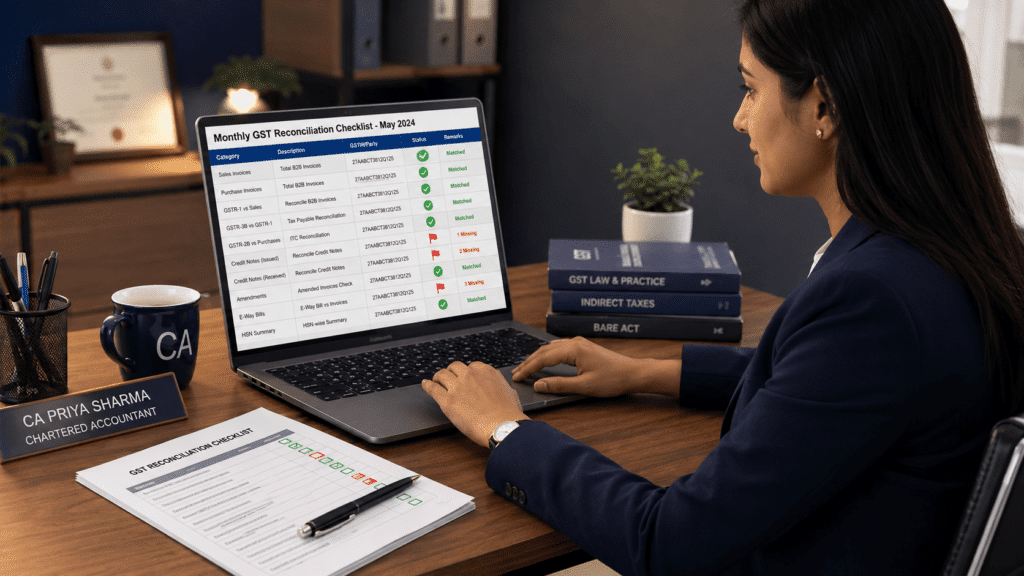
ITC Reconciliation Checklist 2026: Master Input Tax Credit Compliance in India
Input Tax Credit (ITC) errors cost Indian businesses an average of ₹2–5 lakh annually in compliance penalties and missed deductions. The ITC Reconciliation Checklist is your roadmap to eliminate these costly mistakes and ensure every rupee of eligible tax credit is claimed accurately.
GST reconciliation demands precision. Mismatches between GSTR-2A, GSTR-2B, and GSTR-3B filings trigger audit flags and potential interest charges. This comprehensive guide walks you through a step-by-step ITC Reconciliation Checklist designed for Indian businesses filing under GST in 2026.
Understanding ITC Reconciliation and Its Importance
Mastering Input Tax Credit (ITC) reconciliation is crucial for accurate GST compliance in India. ITC reconciliation is the process of matching inbound tax credits claimed in your GST returns against actual supplier invoices and GSTR-2A data filed by your vendors.
The ITC Reconciliation Checklist ensures three critical alignments:
- Invoices received match GSTR-2A entries from suppliers.
- GSTR-2B reconciliation reflects all eligible credits.
- GSTR-3B outward supply figures align with actual sales.
Non-compliance triggers automatic disallowance of ITC under GST rules. The CBIC (Central Board of Indirect Taxes and Customs) enforces strict reconciliation standards. Organizations using verified tools like ClearTax and Tally Solutions report improved compliance and reduced penalties. Businesses that skip this step face penalties, interest accrual, and extended audit cycles.
The Three-Return Reconciliation Framework
Your ITC Reconciliation Checklist must address three GST returns:
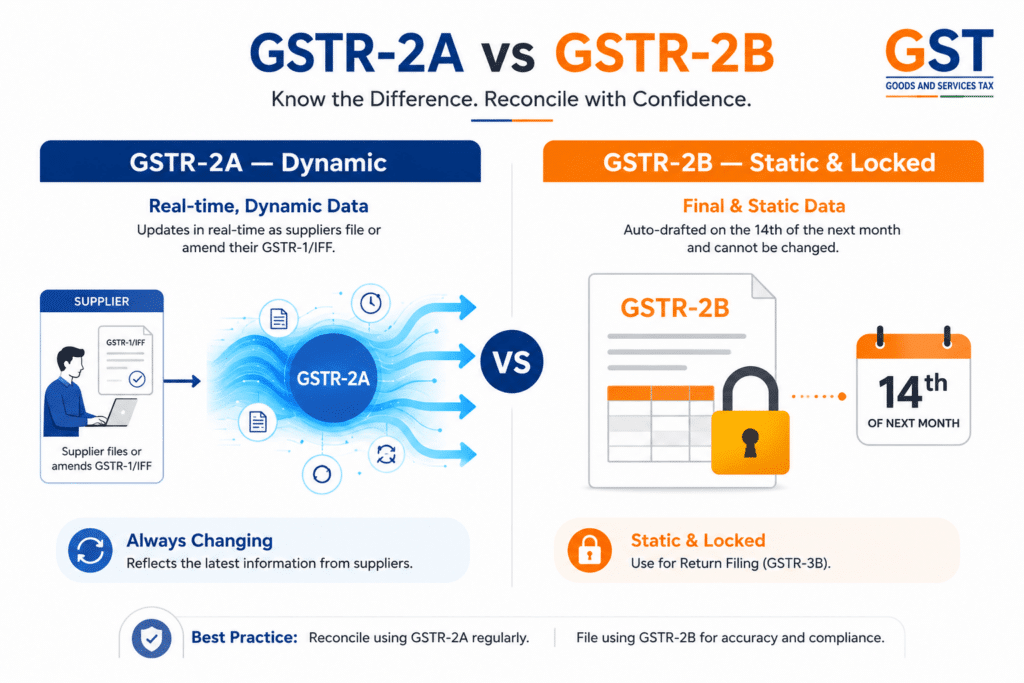
- GSTR-2A: Auto-populated from supplier GSTR-1 filings. Shows inbound invoices and credits available.
- GSTR-2B: Calculated by GST system. Displays maximum ITC you can claim based on supplier filings and your purchases.
- GSTR-3B: Your actual return filed. Must reconcile outward supplies, tax liability, and ITC claimed.
Ensure GSTR 1 and GSTR 3B figures match for outward supplies and tax liability every filing period. This alignment is the foundation of a compliant ITC Reconciliation Checklist.
Step-by-Step ITC Reconciliation Checklist for GST Filing
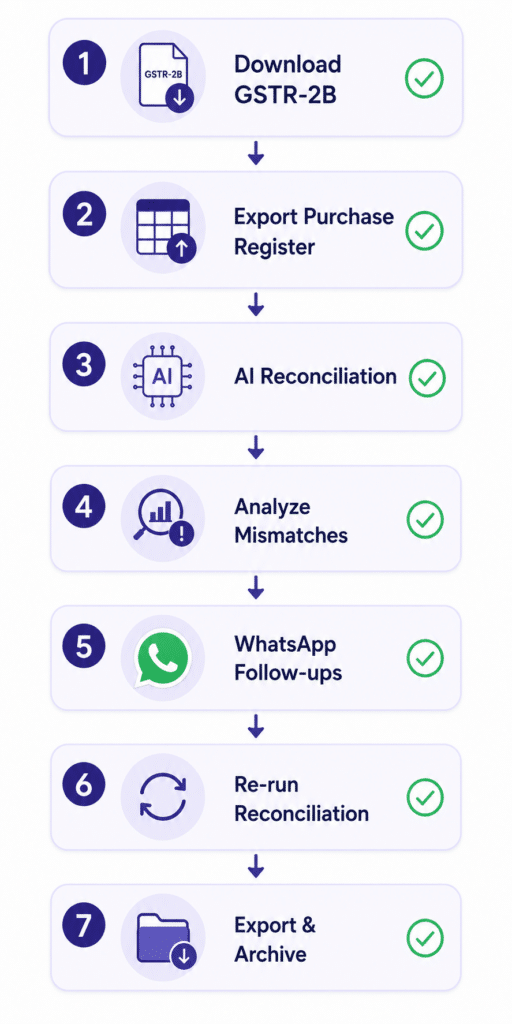
Follow this ITC Reconciliation Checklist sequentially each month before filing GSTR-3B:
- Download GSTR-2A: Log into the GST portal and download your GSTR-2A for the filing month. This shows all invoices uploaded by your suppliers.
- Cross-Check Invoice Count: Match the number of invoices in GSTR-2A against your purchase register. Flag missing or duplicate entries.
- Verify Supplier GSTIN: Confirm each supplier’s GSTIN is active and registered. Inactive suppliers mean no valid ITC claim.
- Review Invoice Amounts and Tax: Check invoice values, HSN codes, and tax rates. Mismatches indicate data entry errors by suppliers.
- Reconcile GSTR-2B Availability: Compare GSTR-2B ITC available against GSTR-2A entries. Gaps suggest supplier filing delays or invoice rejections.
- Match Outward Supply Data: Ensure GSTR-3B outward supplies match your actual sales invoices and GSTR-1 filings.
- Calculate Net ITC Liability: Deduct ITC claimed from output tax to determine net GST liability. Verify this matches your bank payments.
- Document Exclusions: List any invoices excluded from ITC claim (e.g., personal use, blocked items). Keep written justification.
- File GSTR-3B: Submit your return within the deadline with all reconciliation notes attached.
- Retain Supporting Records: Archive all invoices, GSTR-2A downloads, and reconciliation sheets for 5 years.
Common ITC Reconciliation Errors to Avoid
Your ITC Reconciliation Checklist should flag these frequent mistakes:
- Claiming ITC on blocked items: Motor vehicles, personal consumption, and non-business purchases disqualify ITC.
- Mismatched invoice dates: ITC is valid only in the month the invoice is received and recorded.
- Supplier GSTIN deactivation: If a supplier’s registration lapses, all their invoices lose ITC eligibility retroactively.
- Partial goods receipt: Claiming full ITC when only partial goods were received creates audit exposure.
- Ignoring GSTR-2B discrepancies: GSTR-2B shows maximum claimable ITC. Claiming beyond this triggers automatic disallowance.
ITC Reconciliation Tools and Technology Solutions
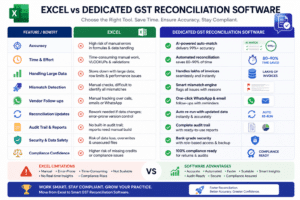
Manual reconciliation is error-prone and time-consuming. In 2026, most Indian businesses use automated solutions to streamline the ITC Reconciliation Checklist process.
BizPlan AI Pro India offers AI-driven ITC reconciliation with real-time GSTR-2A matching, automated invoice flagging, and compliance alerts. The platform integrates with GST portal APIs and generates audit-ready reconciliation reports. Best for businesses filing 50+ invoices monthly, though it requires initial data upload setup that may take 2–3 hours for legacy systems.
Other options worth considering include:
- ClearTax: Web-based GST filing with built-in GSTR-2A/2B reconciliation dashboards and email alerts for mismatches.
- Tally Solutions: Integrated accounting software with native GST modules. Ideal if you already use Tally for invoicing.
- Paytm: GST compliance platform with simplified ITC Reconciliation Checklist templates and mobile filing.
- GST Robo: Automated bot that scans GSTR-2A for discrepancies and suggests corrections before GSTR-3B filing.
Selecting the Right Tool for Your ITC Reconciliation Checklist
Evaluate tools based on these criteria:
- Invoice volume: High-volume businesses (500+ invoices/month) need AI-powered automation.
- Integration capability: Does it connect to your existing accounting software?
- Compliance features: Does it flag blocked items and inactive suppliers automatically?
- Audit trail: Can it generate timestamped reconciliation reports for tax authorities?
- Cost structure: Monthly subscription vs. per-return fees. Compare total cost of ownership.
| Tool | GSTR-2A Matching | GSTR-3B Integration | Audit Reports | Best For |
|---|---|---|---|---|
| BizPlan AI Pro India | Real-time API sync | Auto-populated fields | Compliance-certified PDFs | Mid-to-large businesses (50–500 invoices/month) |
| ClearTax | Manual upload + dashboard | Partial auto-fill | Standard compliance reports | Small-to-medium businesses with basic needs |
| Tally Solutions | Integrated accounting module | Native GST forms | Tally-generated statements | Businesses already using Tally ERP |
| Paytm | Manual entry with templates | Guided filing workflow | Basic checklists | Solo entrepreneurs and micro-businesses |
| GST Robo | Automated bot scanning | Discrepancy alerts only | Exception reports | Businesses needing error detection pre-filing |
Compliance Best Practices for Your ITC Reconciliation Checklist
Beyond the checklist, adopt these practices to strengthen your GST compliance posture:
Monthly Reconciliation Discipline
Don’t wait until filing day to reconcile. Review your ITC Reconciliation Checklist monthly:
- Download GSTR-2A on the 1st of the following month.
- Reconcile against your purchase register within 3 days.
- Flag discrepancies and contact suppliers for corrections.
- Document all exceptions in a compliance log.
- File GSTR-3B only after full reconciliation is complete.
Monthly discipline prevents last-minute surprises and audit exposure.
Supplier Verification Protocol
Your ITC Reconciliation Checklist must include supplier validation:
- Verify supplier GSTIN on the GST portal before claiming their invoices.
- Check registration status (active, suspended, or cancelled).
- Confirm supplier business type matches invoice category.
- Monitor GST Council announcements for blocked suppliers or fake registrations.
Claiming ITC from unregistered or fraudulent suppliers triggers automatic disallowance and penalties.
Documentation and Audit Readiness
Your ITC Reconciliation Checklist output must be audit-ready:
- Maintain a GST Reconciliation Process document with monthly sign-offs.
- Store GSTR-2A downloads and reconciliation sheets digitally.
- Create exception logs for all excluded invoices with justifications.
- Prepare a summary report reconciling GSTR-2A, GSTR-2B, and GSTR-3B figures.
- Retain all documents for 5 years as per GST rules.
When audited, a complete ITC Reconciliation Checklist with supporting evidence significantly reduces penalties and dispute duration.
Frequently Asked Questions
What is ITC Reconciliation?
Mastering Input Tax Credit (ITC) reconciliation is crucial for accurate GST compliance in India. ITC reconciliation is the systematic process of matching inbound tax credits claimed in your GST returns against actual supplier invoices and GSTR-2A data filed by your vendors. It ensures that every rupee of ITC claimed is supported by valid, registered supplier documentation. The ITC Reconciliation Checklist validates that your claimed credits align with GSTR-2B availability and GSTR-3B filing. Non-reconciliation triggers automatic disallowance by the GST system and potential audit flags from tax authorities.
How to Reconcile ITC?
Ensure GSTR 1 and GSTR 3B figures match for outward supplies and tax liability every filing period. Start by downloading GSTR-2A from the GST portal. Cross-check the invoice count and supplier GSTINs against your purchase register. Verify each invoice amount, tax rate, and HSN code. Compare GSTR-2A entries against GSTR-2B to identify gaps caused by supplier filing delays. Match your outward supplies in GSTR-3B against actual sales invoices. Document any excluded invoices with written justification. Finally, calculate net ITC liability and verify it matches your bank payments. Use the ITC Reconciliation Checklist to track each step and retain all supporting documents for audit purposes.
What happens if GSTR-2A and GSTR-2B don’t match?
GSTR-2A shows invoices uploaded by suppliers; GSTR-2B shows maximum ITC you can claim. Gaps between them indicate supplier filing delays, invoice rejections, or supplier registration issues. Your ITC Reconciliation Checklist should flag these discrepancies. Contact suppliers to ensure their GSTR-1 filings are complete and timely. If a supplier’s registration lapses, all their invoices lose ITC eligibility. Never claim ITC beyond GSTR-2B availability—the GST system automatically disallows excess claims. Document all gaps and follow up with suppliers within 5 days of GSTR-2A publication.
Can I claim ITC on invoices not in GSTR-2A?
No. ITC is valid only if the corresponding invoice appears in your GSTR-2A (filed by the supplier in their GSTR-1). If an invoice is missing from GSTR-2A, you cannot claim ITC in GSTR-3B. Your ITC Reconciliation Checklist must identify these missing invoices immediately. Contact the supplier to verify they filed the invoice in GSTR-1. If they did, wait for GSTR-2A to update (usually within 1–2 days). If the supplier hasn’t filed GSTR-1, request them to do so urgently. Only after the invoice appears in GSTR-2A can you claim ITC in the next filing period.
What records must I retain for ITC Reconciliation Checklist audits?
Retain all invoices, delivery notes, and payment receipts for 5 years. Download and archive GSTR-2A, GSTR-2B, and GSTR-3B copies monthly. Maintain a reconciliation log documenting all monthly matches and discrepancies. Store exception reports for excluded invoices with written justifications. Keep supplier GSTIN verification screenshots. Preserve email correspondence with suppliers regarding invoice corrections. Create a master reconciliation summary report reconciling all three returns. Store digitally with backup copies. When audited, this complete ITC Reconciliation Checklist documentation significantly reduces penalties and audit duration. The CBIC expects taxpayers to maintain detailed audit trails for all claimed credits.
Conclusion
The ITC Reconciliation Checklist is non-negotiable for GST compliance in India. Businesses that implement monthly reconciliation discipline, verify supplier credentials, and maintain audit-ready documentation avoid costly penalties and audit exposure. The three-return framework (GSTR-2A, GSTR-2B, GSTR-3B) must align perfectly before filing. Automated tools like BizPlan AI Pro India reduce manual error and accelerate the reconciliation process, especially for businesses with high invoice volumes. For small businesses with fewer than 50 invoices monthly, manual reconciliation using the ITC Reconciliation Checklist template is sufficient. For mid-to-large enterprises, AI-powered automation is cost-effective and compliance-critical. Start with a monthly reconciliation discipline today, document every step, and use the ITC Reconciliation Checklist as your operational standard. Your tax authority expects nothing less, and your bottom line depends on it. Explore BizPlan AI Pro India’s ITC reconciliation features to automate your compliance workflow and claim every eligible rupee of Input Tax Credit.