Flat purchase is a significant investment for individuals in India, and with the introduction of the Goods and Services Tax (GST), it's essential to understand the tax implications. Under-construction flats bought from a promoter are taxed under SAC 9954 at 1.5% GST (0.75% CGST + 0.75% SGST) if the flat is an affordable residential apartment, and at 7.5% (3.75% + 3.75%) otherwise, with no input tax credit in either case (Notification No. 3/2019-Central Tax (Rate), effective 1 April 2019). One-third of the amount charged is deemed to be the value of land under paragraph 2 of Notification No. 11/2017-CT(R), so the effective rates are 1% and 5%. The 18% rate applies to construction services and works contracts, not to a promoter's supply of flats. However, to calculate the exact GST amount, it's crucial to consider the base price and other factors.
To give you a better understanding, let's consider a calculator widget that allows users to input the base price to see the total GST amount. For example, if the base price of the flat is ₹50 lakhs, the GST amount would be ₹9 lakhs (18% of ₹50 lakhs), making the total cost ₹59 lakhs.
| Base Price (₹) | GST Amount (₹) | Total Cost (₹) |
|---|---|---|
| 50,00,000 | 9,00,000 | 59,00,000 |
The GST rate for flat purchase can vary depending on the scheme chosen by the builder or developer. There is no 12% composition rate for flats. An "affordable residential apartment" — carpet area up to 60 sq m in a metropolitan city or 90 sq m elsewhere, with the gross amount charged up to ₹45 lakh — is taxed at 1.5%, which works out to an effective 1% after the deemed land deduction. Other residential apartments are taxed at 7.5%, an effective 5%. A flat whose entire consideration is received after the completion certificate or first occupation is outside GST altogether (Schedule III to the CGST Act). However, the composition scheme has certain conditions and exemptions that need to be considered.
| Scheme | GST Rate (%) | Conditions/Exemptions |
|---|---|---|
| Affordable residential apartment | 1.5% | Effective 1% after the deemed one-third land deduction; carpet area up to 60 sq m in a metro or 90 sq m elsewhere and gross amount up to ₹45 lakh; no ITC |
| Other residential apartments | 7.5% | Effective 5% after the deemed one-third land deduction; no ITC |
Prior to the introduction of GST, the tax regime for flat purchase was complex, with multiple taxes levied by the central and state governments. The pre-GST tax regime included service tax, value-added tax (VAT), and stamp duty, among others. The GST has simplified the tax structure, with a single tax rate applicable across the country.
Under the pre-GST tax regime, the tax rates varied depending on the state and the type of property. For example, in Maharashtra, the VAT rate was 5%, while in Delhi, it was 4.95%. The service tax rate was 15%, and the stamp duty rate varied between 5% to 10%.
| State | VAT Rate (%) | Service Tax Rate (%) | Stamp Duty Rate (%) |
|---|---|---|---|
| Maharashtra | 5 | 15 | 5-10 |
| Delhi | 4.95 | 15 | 5-10 |
Yes, under the regular scheme, builders and developers can claim input tax credit (ITC) for the GST paid on inputs and input services used in the construction of flats. However, under the composition scheme, ITC is not available.
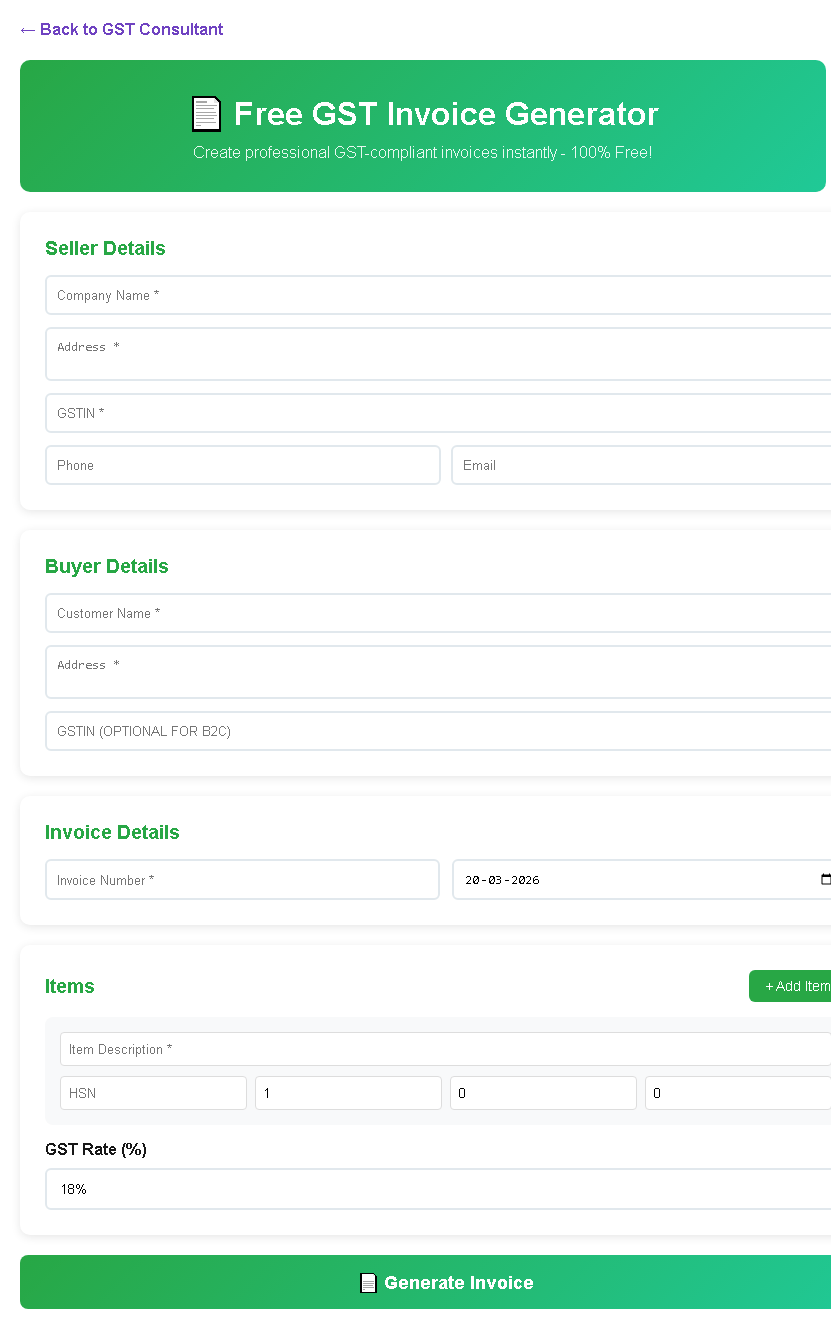
To avoid common billing mistakes associated with flat purchase, it's essential to ensure that the GST invoice includes all the necessary details, such as the HSN/SAC code, GST rate, and amount. Additionally, builders and developers should maintain accurate records of input tax credit and claim it accordingly.
The GST rate for flat purchase under the construction service is 18%, with an HSN/SAC code of 9954. The effective date of the rate is July 1, 2017.
| HSN/SAC Code | GST Rate (%) | Effective Date |
|---|---|---|
| 9954 | 1.5% affordable / 7.5% other residential (no ITC; effective 1% / 5%) | 1 April 2019 |
In conclusion, understanding the GST implications for flat purchase in India is crucial for individuals and builders/developers. The GST rate, HSN/SAC code, and input tax credit are essential factors to consider. By following the compliance tips and maintaining accurate records, individuals can avoid common billing mistakes and ensure a smooth transaction.
18%
9954
Based on the base price and other factors
No, it's applicable on the construction service cost
No, as it's a personal consumption
Rate position checked against the CBIC rate notifications (Notification No. 9/2025-Central Tax (Rate) dated 17 September 2025, effective 22 September 2025, and the notifications it supersedes) and the GST Council's 56th meeting recommendations.