India’s digital ecosystem is exploding at a pace that outstrips most emerging markets. With over 800 million internet users, a mobile‑first population, and a projected digital advertising spend of Rs 12,000 crore by 2025, businesses cannot afford to ignore digital channels. Market research for digital marketing provides the data‑driven foundation to allocate budgets wisely, craft culturally resonant messages, and stay ahead of rapidly shifting consumer behaviours.
In a country where regional languages, festivals, and buying rituals vary dramatically from Delhi to Dhanbad, a one‑size‑fits‑all approach fails. Robust research uncovers:
By integrating these insights, marketers can transform raw data into actionable campaigns that deliver higher ROI, stronger brand equity, and sustainable growth.
| Challenge | Why It Matters in India | Mitigation Strategy |
|---|---|---|
| Fragmented Language Landscape | Over 22 official languages; regional content drives higher engagement. | Localise ad copy and creatives; use AI‑powered translation tools. |
| Variable Internet Connectivity | Rural users often rely on 2G/3G; high‑resolution assets load slowly. | Implement lightweight, progressive web apps and AMP pages. |
| Price Sensitivity & GST Compliance | Consumers compare prices aggressively; digital services taxed at 18% GST. | Show transparent pricing in INR; factor GST into ROI models. |
| Regulatory Scrutiny | ASCI mandates truthfulness; data privacy governed by PDP Bill (in draft). | Maintain compliance checklists; use consent‑management platforms. |
| Platform Saturation | Meta, Google, and home‑grown apps (ShareChat, JioCinema) compete for ad spend. | Adopt a multi‑platform mix; continuously test CPA across channels. |
| Segment | Key Demographics | Preferred Digital Touchpoints |
|---|---|---|
| Urban Millennials (25‑35) | College‑educated, dual‑income, high smartphone usage. | Instagram Reels, LinkedIn, OTT platforms. |
| Tier‑2/3 Aspirants (18‑30) | Price‑sensitive, mobile‑first, aspirational. | WhatsApp Business, YouTube Shorts, regional video apps. |
| Rural Homemakers (30‑50) | Primary decision‑makers for household purchases, limited English. | Facebook, regional language FM radio streaming, SMS. |
| Senior Professionals (35‑55) | High disposable income, brand‑loyal, cross‑device usage. | LinkedIn, Google Search, programmatic display. |
| Methodology | Application in India | Best Practice Tips |
|---|---|---|
| Behavioural Segmentation | Leverage app usage data to group users by content consumption patterns. | Combine device‑level analytics with socio‑economic data for richer personas. |
| Influencer‑Led Funnel | Micro‑influencers in regional languages drive trust and conversion. | Vet influencers for ASCI compliance; negotiate performance‑based fees. |
| AI‑Powered Predictive Modelling | Forecast demand spikes during festivals (Diwali, Navratri) using historical spend. | Use platforms like BizplanAI pro to ingest market‑trend data and generate scenario forecasts. |
| Omni‑Channel Attribution | Track customer journey across WhatsApp, search, and offline retail. | Implement UTM parameters and integrate with CRM for end‑to‑end visibility. |
| Localized Content Testing | A/B test ad creatives in Hindi, Tamil, Bengali, etc., to identify highest CTR. | Run parallel tests with identical budgets; analyse results in real‑time dashboards. |
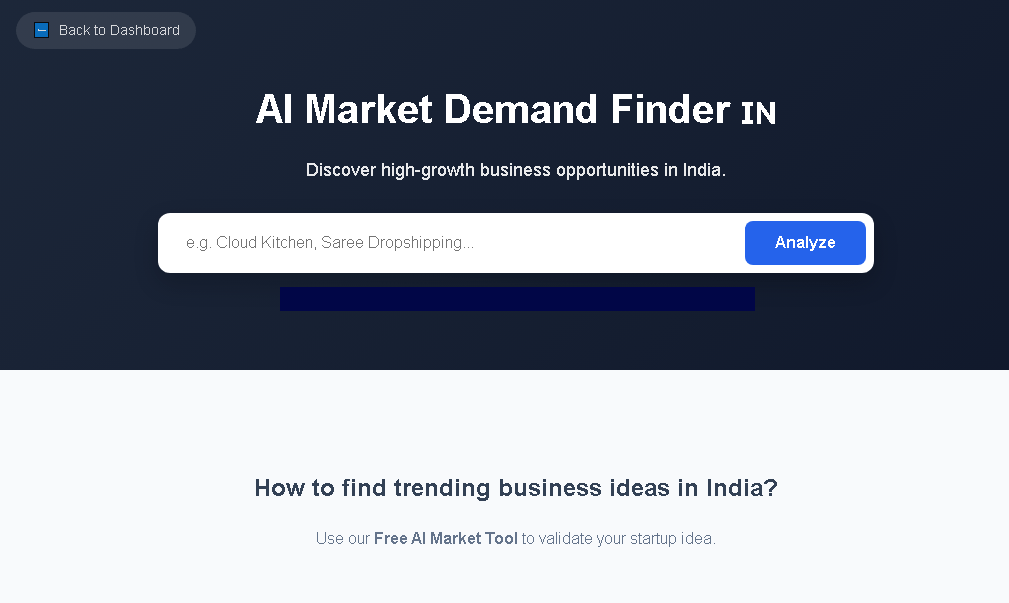
BizplanAI pro (https://bizplanaipro.in/market-check/) offers an AI‑driven market‑analysis engine built specifically for Indian dynamics. Starting at Rs 299/- on a pay‑as‑you‑go model, it provides:
Integrating BizplanAI pro into your research workflow reduces manual data collection time by up to 60 % and ensures you are always acting on the most current market signals.
| Tool / Resource | Primary Use | Cost (INR) |
|---|---|---|
| Google Trends (India) | Identify emerging search queries and seasonal spikes. | Free |
| Meta Ads Manager – Regional Insights | Audience sizing and ad performance by state. | Free (ad spend required) |
| BizplanAI pro | AI‑driven competitor & trend analysis, pricing benchmarks. | From Rs 299/- per query |
| Statista India Digital Report 2024 | Macro‑level market size, penetration rates, forecast data. | Rs 5,500 per report |
| ASCI Advertising Guidelines | Compliance reference for truthfulness and claim substantiation. | Free (downloadable PDF) |
| IAMAI – Internet & Mobile Association of India | Industry research, policy updates, consumer behaviour studies. | Membership required (Rs 2,000‑10,000) |
| Competitor / Trend | What It Means for Marketers | Strategic Response |
|---|---|---|
| ShareChat (regional social network) | Captures 150 million monthly active users in vernacular languages. | Allocate a portion of budget to native ad formats on ShareChat. |
| JioCinema’s ad‑supported tier | Fast‑growing OTT platform with ad inventory priced lower than Netflix. | Test short‑form video ads during regional festivals. |
| AI‑Generated Creative Tools (e.g., Canva AI, Adobe Firefly) | Accelerates production of localized creatives. | Integrate AI tools for rapid A/B testing across languages. |
| Voice Search on Google Assistant & Alexa (Hindi, Tamil) | Increasing share of discovery for e‑commerce queries. | Optimise SEO for conversational, long‑tail queries. |
| Data Privacy Bill (PDP) Draft | Potentially stricter consent requirements. | Implement consent‑first data collection frameworks now. |
| Metric | Definition | Typical Indian Benchmark |
|---|---|---|
| Cost per Acquisition (CPA) | Total ad spend ÷ number of conversions. | Rs 150‑300 for e‑commerce, Rs 30‑80 for app installs. |
| Return on Ad Spend (ROAS) | Revenue generated ÷ ad spend. | 3×‑5× for mature brands, 6×+ for niche verticals. |
| Click‑Through Rate (CTR) | Clicks ÷ impressions. | 0.8‑1.5 % on Google Search, 0.4‑0.9 % on Facebook. |
| Engagement Rate (Video) | Average watch time ÷ video length. | 45‑60 % on short‑form reels. |
| Conversion Rate (Mobile) | Conversions ÷ mobile sessions. | 1.5‑3 % across major e‑commerce portals. |
Begin with a clear objective statement and identify the specific audience segment you want to reach. Use tools like BizplanAI pro to quickly surface competitor spend patterns and regional interest spikes before designing surveys.
Reference the ASCI Advertising Guidelines for claim substantiation, include GST details where required, and embed a consent‑management layer to satisfy upcoming data‑privacy laws. Conduct a compliance audit on all creative assets before launch.
Absolutely. Over 65 % of internet traffic comes from users who prefer vernacular content. Campaigns in Hindi, Tamil, Telugu, or Bengali typically see 20‑30 % higher engagement and lower CPA compared to English‑only ads.
Given the speed of change in Indian digital behaviour, a quarterly refresh is advisable. However, during festival seasons (e.g., Diwali, Eid, Pongal) conduct a rapid‑turnaround study within 2‑3 weeks to capture peak intent.
Yes. Platforms like BizplanAI pro operate on a pay‑as‑you‑go model starting at Rs 299/‑ per query, making advanced analytics accessible even for startups with limited budgets.
With over 800 million internet users and a mobile‑first audience, digital channels offer the widest reach, real‑time engagement, and measurable ROI that traditional media can’t match.
India has more than 800 million internet users, providing an enormous pool of potential customers for brands to target through precise digital campaigns.
Analysts estimate digital ad spend will reach roughly Rs 12,000 crore by 2025, reflecting rapid growth and increasing budget allocations to online media.
Data‑driven market research helps allocate budgets wisely, tailor culturally resonant messages, and identify high‑performing channels, boosting campaign effectiveness.
Since most Indians access the internet via smartphones, a mobile‑first strategy ensures content, ads, and user experiences are optimized for small screens, driving higher engagement and conversions.