India’s higher‑education landscape is undergoing a rapid transformation driven by demographic shifts, government reforms, and the rise of digital learning platforms. Conducting robust market research is no longer a luxury—it is a strategic imperative for universities that aim to attract the right students, launch relevant programmes, and stay ahead of emerging competitors.
Effective market research equips university leadership with data‑backed insights on enrolment trends, student preferences, regulatory changes, and financial viability. It also helps institutions align their academic offerings with the needs of the Indian job market, thereby improving graduate employability and institutional reputation.
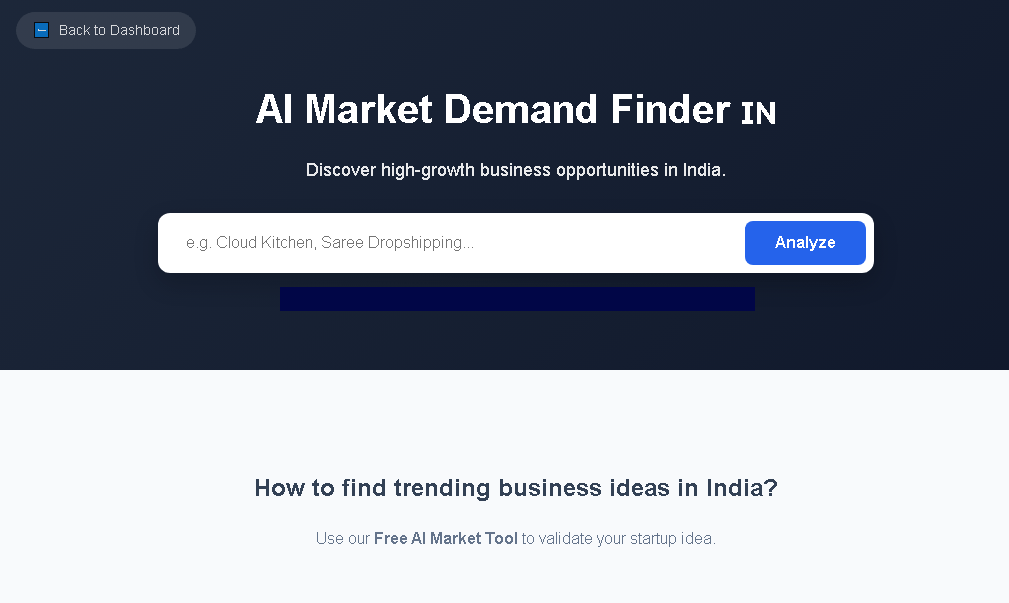
In this article, we dive deep into the unique challenges Indian universities face, outline proven methodologies, and provide a step‑by‑step guide to executing high‑impact market research. Throughout, we highlight how BizplanAI pro can streamline data collection, analysis, and reporting—starting at just Rs. 299 per use.
Indian universities must navigate multiple regulatory bodies, including the University Grants Commission (UGC), All India Council for Technical Education (AICTE), and state education departments. Compliance requirements differ for central, state, and private institutions, affecting programme approvals, fee structures, and accreditation processes.
India’s student population is highly heterogeneous, spanning rural‑to‑urban, socio‑economic, linguistic, and cultural dimensions. Universities need to segment their audience precisely to tailor marketing, scholarships, and support services.
While premium private universities can command higher fees, the majority of Indian students rely on scholarships, government loans, or family contributions. Understanding price elasticity across segments is crucial for sustainable revenue planning.
Online and hybrid learning models have surged post‑COVID‑19. Universities must assess digital readiness, platform preferences, and the competitive landscape of Massive Open Online Courses (MOOCs) and ed‑tech partners.
Employers increasingly demand industry‑aligned curricula, soft‑skill development, and internship opportunities. Market research must capture employer expectations and emerging skill gaps across sectors such as IT, renewable energy, and healthcare.
Deploy large‑scale surveys targeting prospective students, parents, alumni, and recruiters. Use stratified sampling to ensure representation across states, income brackets, and language groups. Platforms like Google Forms, Qualtrics, or BizplanAI pro’s AI‑driven survey engine can automate data collection and real‑time analytics.
Conduct focus groups in tier‑2 and tier‑3 cities to uncover nuanced motivations, cultural barriers, and perception gaps. In‑depth interviews with industry leaders help map skill demand and partnership opportunities.
Analyze peer institutions on parameters such as programme portfolio, fee structures, placement rates, and digital infrastructure. Benchmarking tools from BizplanAI pro aggregate public data, rankings, and social‑media sentiment for a holistic view.
Leverage GIS tools to map student catchment areas, transportation links, and regional economic indicators. This aids in campus expansion decisions and targeted outreach campaigns.
Utilize machine‑learning models to forecast enrolment trends, dropout risks, and ROI of new programmes. BizplanAI pro’s AI engine can ingest historical admissions data, macro‑economic indicators, and competitor activity to generate actionable forecasts.
| Resource / Tool | Type | Key Features for Universities | Access / Cost (Rs.) |
|---|---|---|---|
| BizplanAI pro Market Check | AI‑driven research platform | Real‑time competitor analysis, AI‑powered surveys, predictive enrolment models | Starting at 299 (pay‑as‑you‑go) |
| UGC & AICTE Databases | Regulatory data portal | Accreditation status, approved programmes, fee caps | Free |
| National Institutional Ranking Framework (NIRF) | Ranking & performance data | Benchmarking scores, research output, outreach | Free |
| All India Survey on Higher Education (AISHE) | Government statistical report | Enrollment numbers, gender ratio, regional distribution | Free |
| Statista India Education Hub | Market research reports | Revenue forecasts, ed‑tech adoption rates, student spending patterns | Subscription (≈ Rs. 5,000/month) |
| Google Trends & Keyword Planner | Search behaviour analytics | Identify popular programmes, regional interest spikes | Free |
| LinkedIn Talent Insights | Employer & alumni analytics | Graduate employment trends, skill demand heatmaps | Enterprise pricing |
Use the table below to map primary segments and their characteristics.
| Segment | Demographic Profile | Key Decision Drivers | Preferred Communication Channels |
|---|---|---|---|
| Urban High‑Income Aspirants | 18‑24, parents with annual income > Rs. 15 Lakh, English‑medium schools | Global exposure, placement records, brand prestige | Instagram, webinars, alumni events |
| Rural Merit‑Based Seekers | 18‑22, income < Rs. 5 Lakh, government schools | Scholarships, fee affordability, proximity | WhatsApp groups, local radio, school counsellors |
| Working Professionals (PG & Executive) | 25‑35, employed full‑time, seeking career up‑skilling | Flexible timings, industry‑linked curriculum, ROI | LinkedIn, email newsletters, corporate tie‑ups |
| International Students (SAARC & Beyond) | 18‑30, seeking Indian education for cost‑effectiveness | Visa support, multicultural campus, English instruction | Facebook ads, education fairs, partner agencies |
Match each research objective with the most suitable method from the “Key Methodologies” section. For example, use quantitative surveys for fee elasticity and qualitative focus groups for brand perception.
Combine online distribution (email, social media) with on‑ground data collection at schools, coaching centres, and industry events. Ensure compliance with the Personal Data Protection Bill (India) for consent handling.
Translate insights into concrete tactics: adjust fee slabs, launch targeted scholarships, design new interdisciplinary programmes, or invest in campus Wi‑Fi upgrades.
Run pilot programmes or A/B test marketing messages based on research outputs. Capture performance metrics (see success metrics table) and refine the strategy quarterly.
| Metric | Definition | Target Benchmark (India) | Data Source |
|---|---|---|---|
| Enrolment Conversion Rate | Applicants who enrol divided by total leads | ≥ 20 % for private universities; ≥ 12 % for public institutions | Admissions CRM |
| Average Tuition Revenue per Student | Total tuition collected ÷ total enrolled students | Rs. 2.5 Lakhs (undergraduate) – Rs. 5 Lakhs (post‑graduate) | Finance Office |
| Placement Rate (6‑Month) | Graduates employed within six months of graduation | ≥ 85 % for professional programmes | Alumni Survey / LinkedIn Insights |
| Scholarship Utilisation Ratio | Number of scholarships awarded ÷ eligible applicants | ≥ 30 % for merit‑based schemes | Scholarship Management System |
| Digital Engagement Score | Weighted sum of website visits, webinar attendance, and social media interactions per prospect | ≥ 150 points per quarter | BizplanAI pro analytics dashboard |
| Research Funding Growth | Year‑on‑year increase in external research grants | ≥ 10 % annual growth | Grant Management Office |
Start by defining clear research objectives—such as assessing demand, price sensitivity, and competitor offerings—then identify the relevant audience segments (e.g., urban aspirants, working professionals). A focused objective prevents scope creep and ensures actionable outcomes.
Obtain explicit consent, disclose the purpose of data collection, store data on secure servers located in India, and provide an opt‑out mechanism. BizplanAI pro’s platform includes built‑in compliance templates aligned with the Personal Data Protection Bill.
In‑depth interviews with HR leaders and industry association panels, complemented by LinkedIn Talent Insights, provide a granular view of skill gaps and preferred curriculum components.
Yes. By identifying gaps in research output, faculty qualifications, and outreach, universities can implement targeted initiatives that directly influence NIRF parameters such as “Research and Professional Practice” and “Graduation Outcomes”.
AI tools like BizplanAI pro accelerate data processing, uncover hidden patterns, and generate predictive enrolment models at a fraction of the cost of traditional consultancy. For institutions with limited research budgets, the pay‑as‑you‑go model starting at Rs. 299 makes it a cost‑effective choice.
Given the fast‑changing Indian higher‑education environment, a full research cycle is recommended annually, with quarterly micro‑studies to track emerging trends such as new ed‑tech platforms or policy shifts.
Official university websites, NIRF rankings, AICTE programme approvals, social‑media sentiment, and third‑party platforms like BizplanAI pro that aggregate public filings and news articles provide a comprehensive competitor view.
It helps universities identify student demand, design relevant programs, and stay competitive in a rapidly changing education landscape.
Demographic trends, competitor offerings, student preferences, employment outcomes, and emerging digital learning platforms.
At least annually, and before launching new courses or major strategic initiatives.
Surveys, focus groups, social media analytics, enrollment data platforms, and third‑party education market reports.
By targeting the right segments, tailoring messaging, and aligning program portfolios with market demand, leading to higher enrollment rates.