India’s B2B landscape is evolving at a breakneck speed, driven by digital transformation, government initiatives such as Make in India and Digital India, and a burgeoning middle‑class of enterprise buyers. Conducting rigorous market research for B2B (business‑to‑business) ventures is no longer a luxury—it is a strategic imperative. Accurate insights help Indian manufacturers, SaaS providers, logistics firms, and professional services understand procurement cycles, regulatory nuances, and regional buying behaviours that differ dramatically from consumer‑facing markets.
When you invest in B2B market research, you gain:
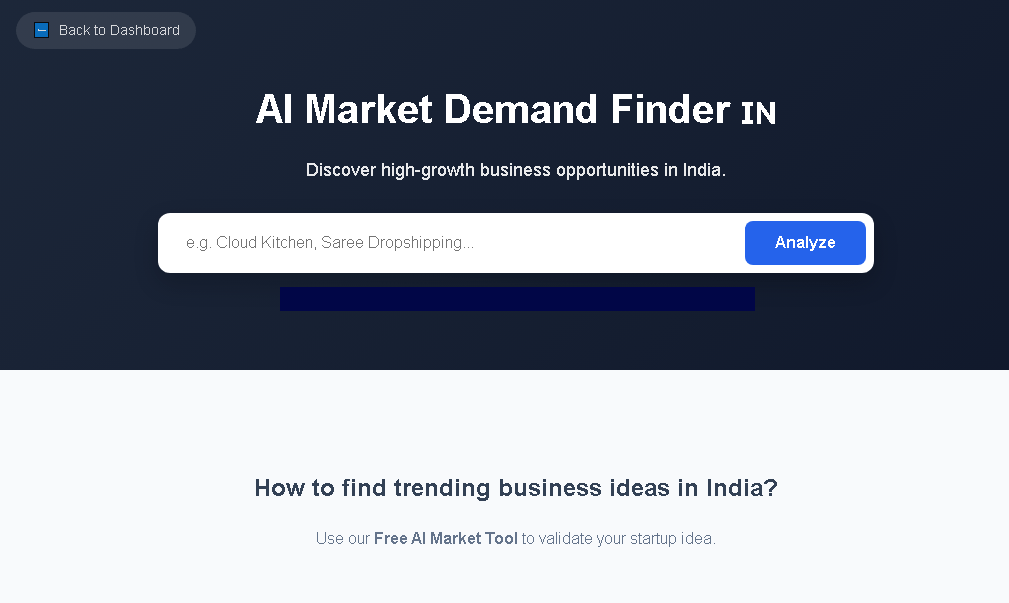
For Indian B2B firms, leveraging AI‑powered platforms like BizplanAI Pro—starting at just Rs. 299 per analysis—offers a cost‑effective way to decode market trends, benchmark competitors, and forecast revenue with Indian‑specific data points.
Unlike B2C, Indian B2B transactions involve multiple decision‑makers, longer sales cycles, and a heavy reliance on relationship‑building (often referred to as “jugaad”). Understanding these nuances is critical for any research initiative.
| Challenge | Impact on Research | Mitigation Strategy |
|---|---|---|
| Complex Buying Committees | Multiple stakeholders (finance, operations, procurement) dilute clear insights. | Segment interview respondents by role; use weighted scoring to prioritize needs. |
| Lengthy Procurement Cycles | Data becomes outdated quickly if collection spans >6 months. | Adopt rolling quarterly studies and real‑time AI analytics (e.g., BizplanAI Pro). |
| Regional Regulatory Variations | State‑specific tax incentives and labour laws affect vendor selection. | Map regulations per state; incorporate local legal experts in the research team. |
| Limited Digital Footprint in Tier‑2/3 | Traditional data sources miss a large portion of the market. | Combine online surveys with field interviews and trade‑show observations. |
| Price Sensitivity & GST Compliance | Mis‑pricing leads to contract re‑negotiations. | Integrate GST calculators and competitor price benchmarks. |
| Segment | Typical Industries | Key Decision‑Maker Titles |
|---|---|---|
| Large Enterprises (Revenue > ₹5 bn) | Automotive, Energy, IT Services | Chief Procurement Officer, VP – Operations |
| Mid‑Size Companies (Revenue ₹500 mn‑5 bn) | Pharma, FMCG, Construction | Head of Supply Chain, Finance Director |
| Start‑ups & Scale‑ups | FinTech, EdTech, SaaS | Founder/CEO, Product Lead |
| Public Sector Units (PSUs) | Railways, Power Generation, Defense | Director – Procurement, Government Liaison Officer |
| Channel Partners & Distributors | Industrial Equipment, IT Hardware | Regional Sales Manager, Channel Head |
Choosing the right methodology determines whether your insights are actionable or merely descriptive. Indian B2B research benefits from a blend of quantitative rigor and qualitative depth.
| Methodology | Application in Indian B2B | Best Practice Tips |
|---|---|---|
| In‑Depth Interviews (IDI) | Capture nuanced procurement logic from senior executives. | Use a semi‑structured guide; record in regional languages where needed. |
| Delphi Panels | Gather consensus from a panel of industry experts across metros. | Run 3‑round iterative surveys; anonymise responses for candidness. |
| Conjoint Analysis | Quantify trade‑offs between price, service level, and compliance. | Integrate GST impact scenarios; test with at least 200 respondents. |
| Secondary Data Mining | Leverage government databases (e.g., Ministry of Corporate Affairs), trade association reports, and RBI credit data. | Validate with primary data; adjust for lag in reporting. |
| AI‑Driven Sentiment Mining | Analyse LinkedIn posts, industry forums, and procurement portals for emerging trends. | Employ tools like BizplanAI Pro for real‑time sentiment scores. |
| Field Observation & Mystery Shopping | Assess on‑ground sales processes of distributors in Tier‑2 cities. | Standardise checklists; train observers on cultural etiquette. |
| Metric | Definition | Target Benchmark (India) |
|---|---|---|
| Response Rate | Percentage of contacted decision‑makers who complete the survey. | ≥ 30 % for online; ≥ 50 % for face‑to‑face. |
| Data Accuracy | Alignment of primary findings with secondary financial filings. | ≥ 95 % match on revenue & headcount figures. |
| Insight Turn‑around Time | Days from data collection to actionable report delivery. | ≤ 21 days using AI augmentation. |
| ROI of Recommendations | Revenue uplift attributable to implemented insights. | 10‑15 % increase in first‑year sales. |
| Compliance Score | Adherence to Indian data‑privacy (IT Act 2000) and GST reporting standards. | 100 % compliance. |
Access to reliable data sources and analytical tools can dramatically reduce research time and improve precision. Below is a curated list of Indian‑centric resources.
| Resource | Focus Area | Cost (INR) | Key Features |
|---|---|---|---|
| CMIE Prowess | Corporate financials, credit ratings. | ₹ 12,000/yr | Real‑time balance‑sheet data; GST‑compliant reports. |
| Statista India | Macro‑economic & sector trends. | ₹ 8,500/yr | Infographics, downloadable CSVs. |
| Ministry of Commerce & Industry – Export Data | Trade flows, customs duties. | Free | State‑wise export‑import matrices. |
| BizplanAI Pro | AI‑driven market trend analysis, competitor benchmarking. | From ₹ 299 per analysis | Instant dashboards, sentiment scoring, GST impact modelling. |
| LinkedIn Sales Navigator (India) | Decision‑maker profiling. | ₹ 1,500/mo | Advanced filters for industry, seniority, region. |
| IndiaMART Insights | SME procurement patterns. | Free basic; premium on request | Query volumes, price ranges, buyer demographics. |
This actionable roadmap walks you through every phase, from initial scoping to delivering insights that drive sales and compliance.
Using a blended methodology and AI tools, most projects can be completed in 8‑10 weeks: 2 weeks for scoping, 3 weeks for data collection, 2 weeks for analysis, and 1 week for reporting.
GST adds a uniform 18 % (or sector‑specific rates) to the invoice value. Research must model both pre‑GST and post‑GST pricing to understand net margins and buyer willingness to pay.
BizplanAI Pro complements traditional firms by providing instant AI‑driven trend analysis at a fraction of the cost (starting at Rs. 299). For deep‑dive qualitative work, a hybrid approach is recommended.
Researchers must comply with the Information Technology Act 2000, the Personal Data Protection Bill (when enacted), and GST regulations for invoicing. Consent forms should be in the respondent’s preferred language.
Combine online surveys with on‑ground interviews, leverage local trade associations, and use field agents who understand regional business customs. AI sentiment mining of regional forums also uncovers hidden trends.
Yes, especially for sectors where decision‑makers prefer vernacular communication (e.g., manufacturing in Tamil Nadu or Karnataka). Multilingual surveys improve response rates and data quality.
Companies that act on data‑driven insights typically see a 10‑15 % increase in first‑year sales, reduced procurement cycle time by up to 30 %, and better compliance leading to fewer regulatory penalties.
B2B market research gathers data on enterprise buyers, competitors, and market trends, enabling Indian firms to make data‑driven decisions, reduce risk, and tailor offerings to a rapidly evolving corporate landscape.
Digital tools streamline procurement, increase demand for SaaS and cloud solutions, and shift buyers toward online research and e‑procurement platforms, making real‑time insights essential for sellers.
Programs like Make in India, Digital India, and the Production‑Linked Incentive (PLI) schemes boost manufacturing, technology adoption, and export potential, creating new B2B opportunities.
Primary methods include in‑depth interviews, B2B surveys, focus groups, and field observations; secondary sources involve industry reports, government data, and competitor analysis.
By identifying unmet enterprise needs, optimizing pricing, refining go‑to‑market strategies, and anticipating regulatory changes, firms can tailor solutions that resonate with Indian corporate buyers.